Getting ready for a swim only to find algae in your pool can be frustrating and unsettling, especially since algae can form rapidly and catch you by surprise.
While algae is a common nuisance in the pool, it can be quickly addressed with a combination of chemical balancing, brushing, shocking, and filtration. The problem is easier to address the sooner you do it, so in this guide, we’ll share how to get rid of algae fast and prevent it from coming back.
What Causes Algae to Form in a Pool?
Algae spores make their way into pools through wind, rain, debris, and even swimsuits or pool toys that go into the water. Once the spores are in the pool, they can multiply rapidly under the right conditions. Algae spores thrive when chlorine levels are below 1 part per million (ppm), the temperature is above 80°F, there’s high sun exposure, and the pool water is stagnant from not running the filter enough.
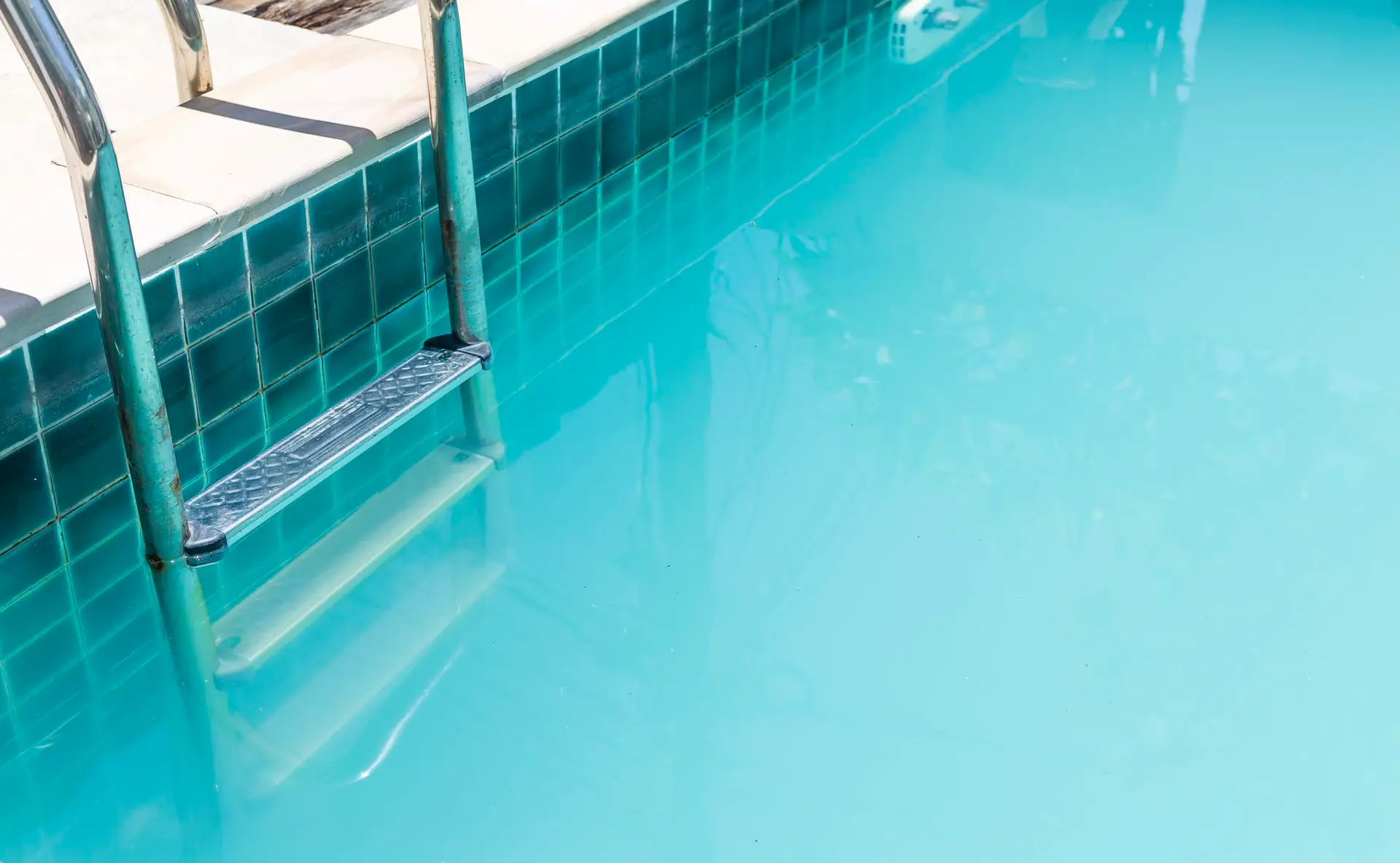
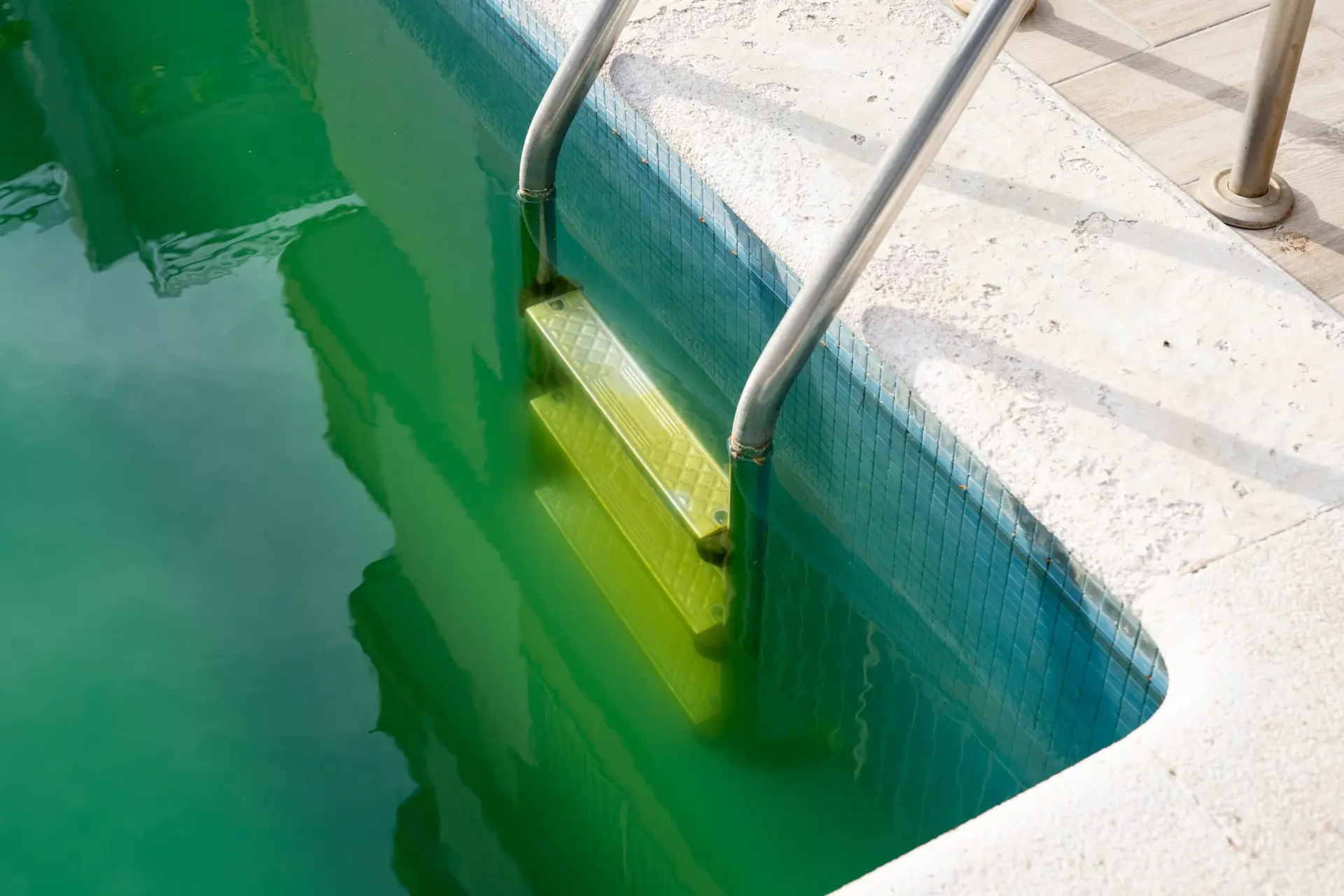
Within 1-2 days, the spores will start to bloom, changing the water appearance to hazy and leaving a layer of film over water and surfaces that feels slimy. By day 3, the water can change color to green, yellow, or black depending on the type of algae.
How to Determine the Type of Pool Algae
There are different types of pool algae, and some are harder to treat than others, so it’s important to identify the type before you start the treatment process.
Green Pool Algae
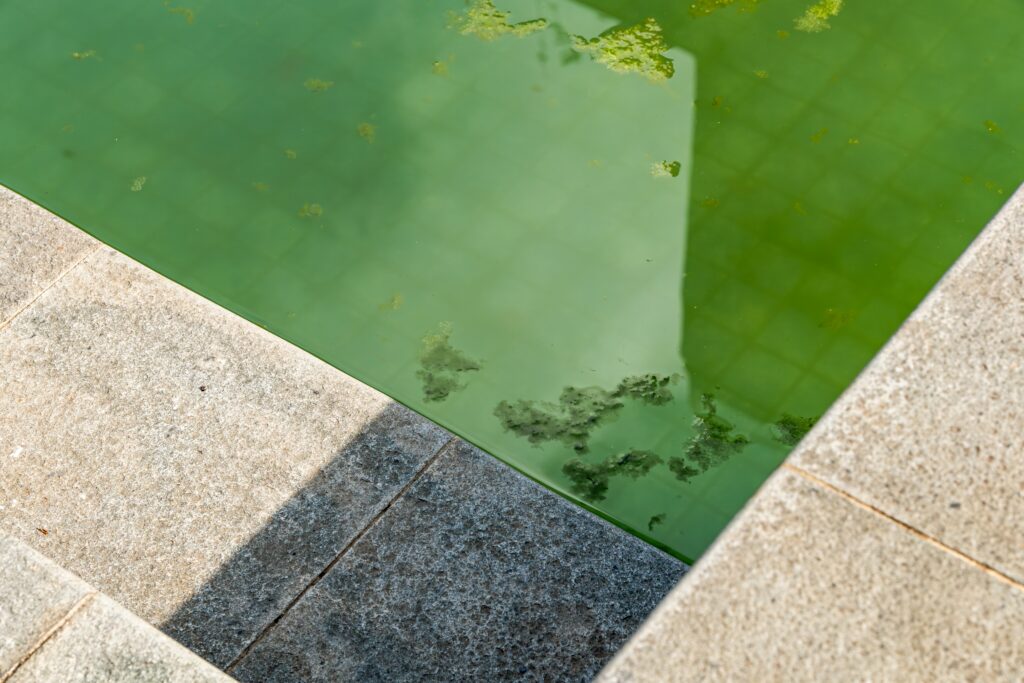
Green algae is the most common type and often makes the water look green or murky while leaving a slippery film on pool surfaces. It spreads quickly but is generally the easiest type of algae to treat.
Yellow/Mustard Pool Algae

Yellow or mustard algae appears as yellowish or brown patches along walls and in shaded areas of the pool. It typically appears in humid conditions and in the shady areas of pools which can make it harder to spot. It grows slower than green algae, but is more resistant to treatment, meaning you may need several rounds to get rid of it.
Black Pool Algae

Black algae appears as small, dark spots that cling tightly to pool surfaces and then spreads rapidly into the water. If left unaddressed, black algae can penetrate deep into the concrete walls of your pool and even cause structural damage, so it’s best to deal with it promptly.
7 Steps to Get Rid of Pool Algae
Once you figure out what type of pool algae you’re dealing with, work through these steps to get rid of the issue. This process may need to be repeated for larger algae outbreaks.
1. Test and Balance the Pool Water
Before treating, test your pool’s pH, alkalinity, stabilizer, and chlorine levels to see if an imbalance is a factor in the outbreak. For most pools, you should aim for a pH around 7.4–7.6, total alkalinity of 80–120 ppm, stabilizer around 30–50 ppm, and chlorine around 1–3 ppm.
Keeping these levels balanced helps chlorine work effectively and gives you a better starting point before shocking the pool or applying algaecide.
2. Remove Leaves and Debris
Use a skimmer or grab anything you see in your pool such as leaves, twigs, and pool toys. All of these give algae more places to grow, so remove them before treatment and make sure to clean any toys before they go back in the pool.
3. Brush the Walls and Floor
Brush the pool’s walls, floor, steps, corners, and any other surfaces where you see algae. Brushing loosens the algae from surfaces and exposes more of it to chlorine, helping to break it down faster.
4. Shock the Pool
To clarify, shocking isn’t actually using electricity; it’s a process that involves adding chemicals to raise the chlorine levels and kill the algae. This typically means adding a much higher level of chlorine than you normally would, often around 10-20 ppm, though the right amount depends on the type of algae you’re dealing with, your pool size, and the shock product you use.
Pool shock products come in liquid or powdered forms, and different products add different compounds to the water, so calculate the amount based on your pool size and follow the product label carefully. Shock your pool in the evening so UV rays don’t break down the chlorine, then keep the pump running to circulate the treatment.
5. Add Algaecide
After shocking and circulating the pool, an algaecide can help kill any remaining algae and prevent it from coming back. Choose a product formulated for the type of algae you’re treating and follow the label closely, since some algaecides should only be added after chlorine levels have dropped from shock treatment.
6. Run Your Pool Pump and Filter
Run your pool’s pump and filter continuously while the algae is being treated so the water circulates and dead algae can be removed. The time it takes depends on the severity of the outbreak, and it can take anywhere from a few hours up to 1-2 days for a big algae issue.
7. Vacuum and Backwash Your Pool
Even after the water starts to clear, dead algae and debris can settle on the pool floor or remain trapped in the filtration system. Vacuum the pool thoroughly to remove anything that’s settled, then clean the filter, which may involve backwashing it or cleaning the cartridge depending on the type. Once the filter is cleaned, test the water and adjust the chemistry to balance it before swimming.
How Long Does It Take to Get Rid of Pool Algae?
The time it takes to clear algae depends on the type of algae and the severity of the outbreak. A small green algae problem can improve within 1-2 days, while a bigger outbreak or more resistant form of algae may take multiple treatment cycles to get rid of. Even after the algae is dead, the water may remain cloudy as the filter removes the remaining particles. Vacuuming and cleaning the filter will help to speed up this process.
How to Prevent Algae From Coming Back
Once the algae has been removed, keeping up with pool maintenance will help prevent it from coming back. Focus on keeping the water balanced, circulating, and free of debris.
- Test and balance pool water regularly
- Maintain proper sanitizer levels
- Brush and vacuum the pool routinely
- Keep leaves and debris out of the water
- Clean the filter as needed
- Maintain good water circulation
When to Call a Pool Professional
If algae keeps coming back after treatment, it can be a sign of poor circulation, an equipment issue, or algae that’s deeply embedded in the pool’s surface.
Consider calling a pool professional if the water doesn’t improve after repeated treatments. A professional will test the water, inspect the equipment, and help identify what’s causing the algae to return so the issue can be resolved.
Keep Your Pool Clear with Anthony & Sylvan
Regular pool maintenance goes a long way toward preventing algae from forming. Anthony & Sylvan offers pool maintenance services including water testing, cleaning, and equipment care so your pool stays ready to use.
If algae keeps coming back or you’d rather leave pool care to the professionals, contact Anthony & Sylvan to schedule pool maintenance service.