Thinking about adding a pool to your backyard? It’s an exciting decision that can transform your outdoor space into a personal paradise for relaxation, entertainment, and family fun. But before you dive into designs and features, one of the most important choices you’ll make is selecting the right pool material.
The two most popular options, gunite and fiberglass, each offer unique advantages, along with some important considerations. From installation time and cost to durability, understanding the differences between these materials is key to choosing the best fit for your home, lifestyle, and budget.
In this guide, we’ll break down everything you need to know about gunite vs. fiberglass pools to decide which type of pool to build.
What is a gunite pool?
A gunite pool is an inground, concrete swimming pool made from a blend of sand, water, and cement. Known for its strength and dependability, a gunite pool offers exceptional durability and long-lasting performance. One of the standout features of a gunite pool is that it has a fully customizable design and can be tailored in shape, size, and depth to perfectly complement your backyard.
The construction process involves spraying the gunite mixture onto a rebar framework using a high-pressure hose, which forms the walls and floor of the pool. Once applied, the concrete requires a curing period of a few days to reach its full strength. This method not only ensures an enduring structure, but also allows for completely custom pool designs.
What is a fiberglass pool?
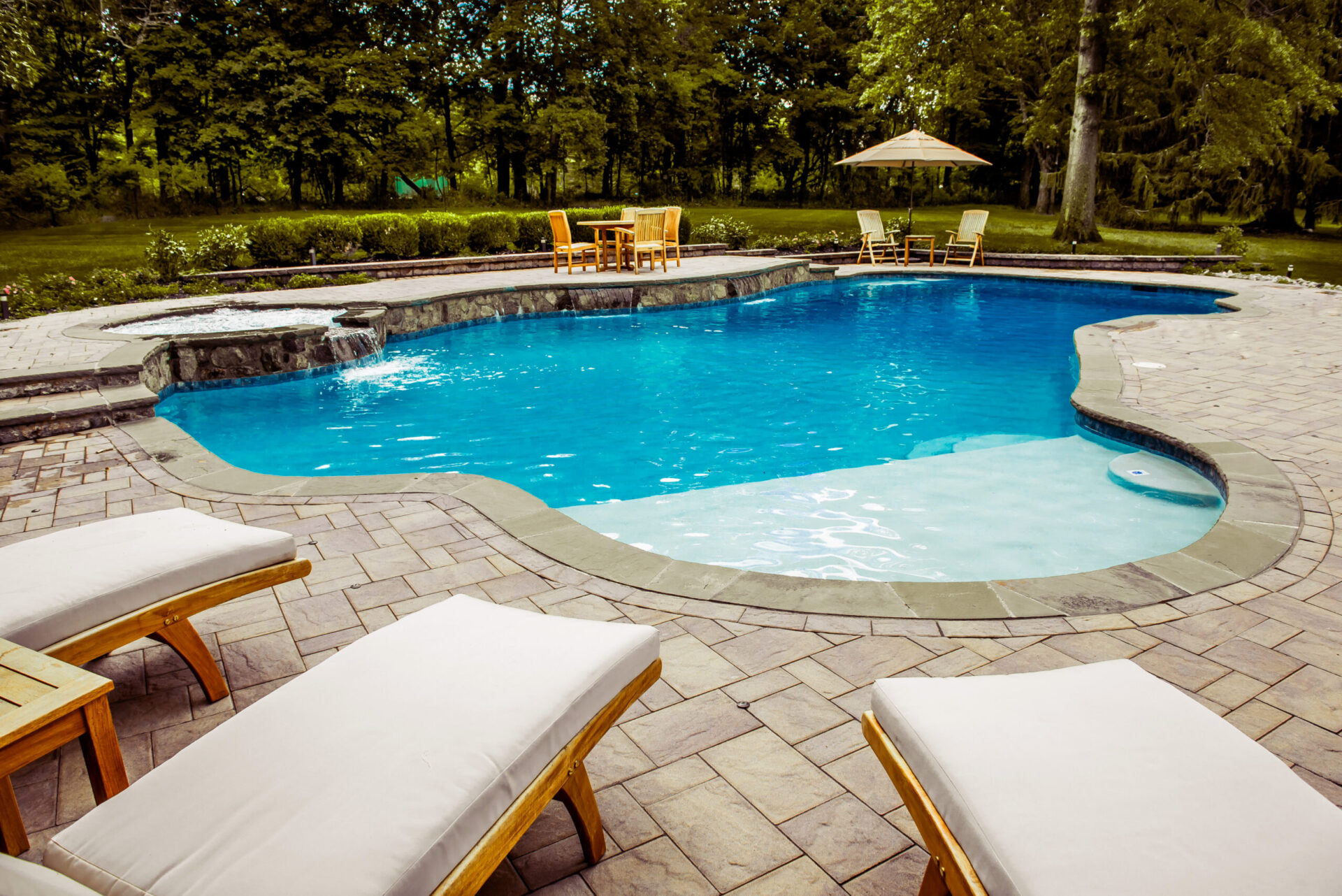
A fiberglass pool is pre-constructed and made from a sturdy fiberglass shell. These pools are primarily installed as inground options, but there are also above-ground models available.
Unlike gunite pools, which are built on-site, fiberglass pools are manufactured and delivered as a complete unit. Because fiberglass pools come in standard shapes and sizes, they are designed for quick installation but don’t offer the level of customization that’s available with gunite.
Gunite pool pros and cons
Gunite pools come with unique benefits and challenges that are worth considering.
Pros
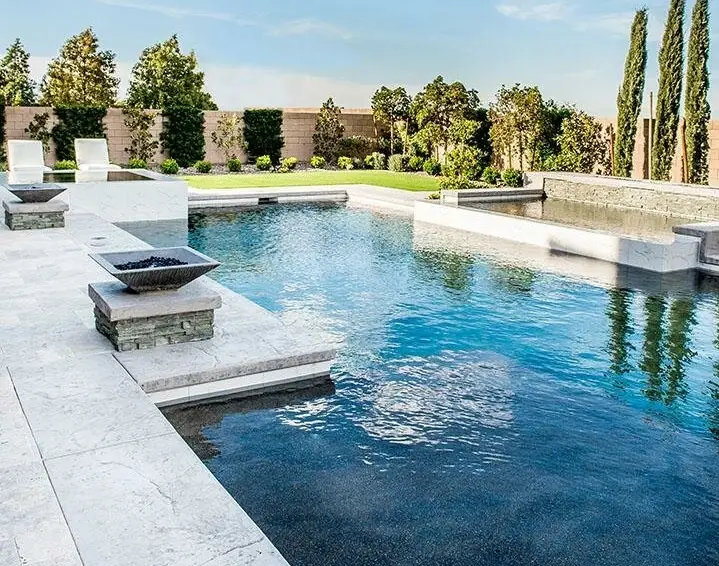
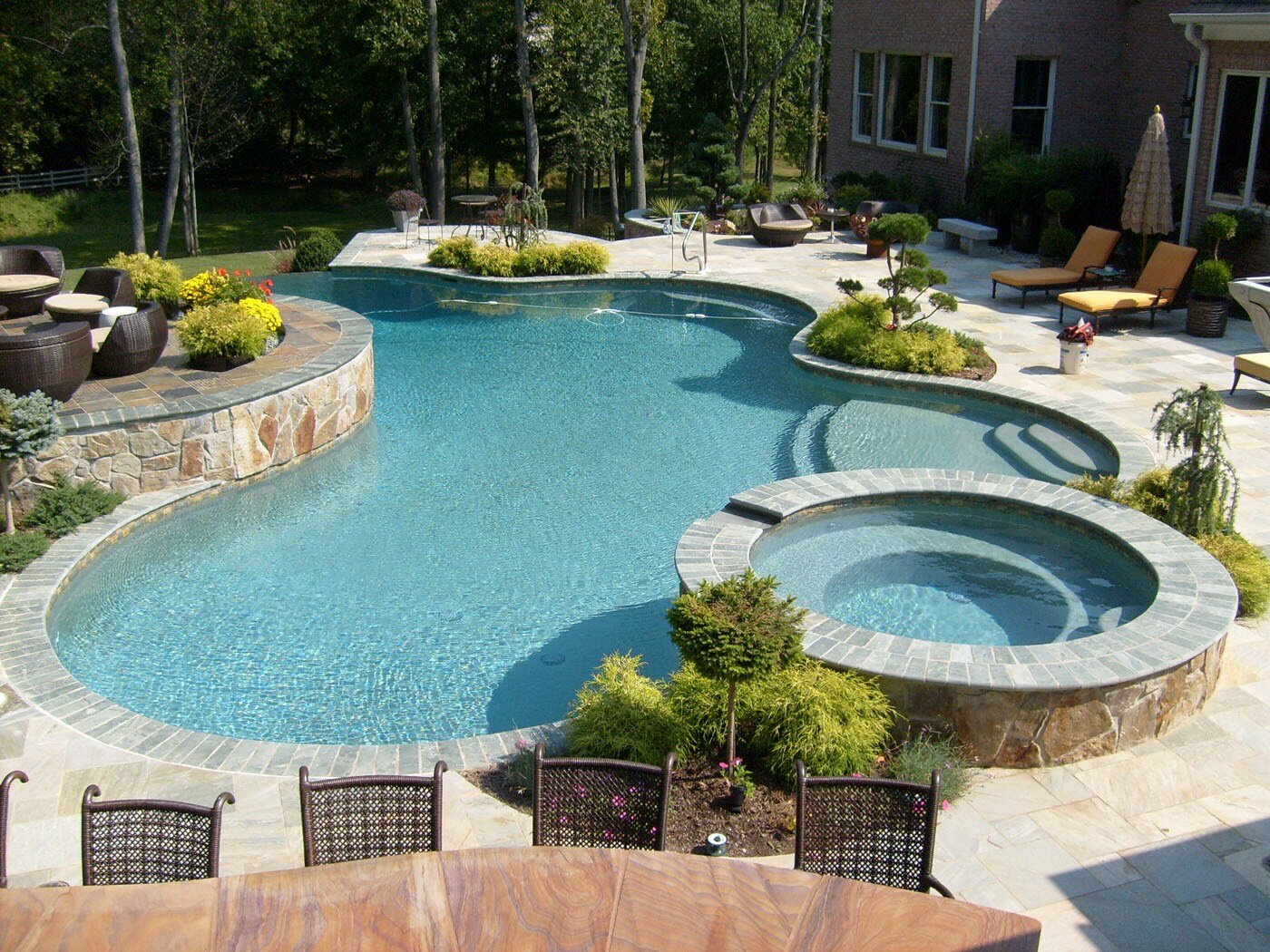
- Fully customizable design: Gunite pools allow homeowners to achieve a truly personalized design, as every pool can be built to unique specifications in terms of size, shape, depth, and finish. This unrivaled level of customization ensures your pool perfectly fits your backyard vision.
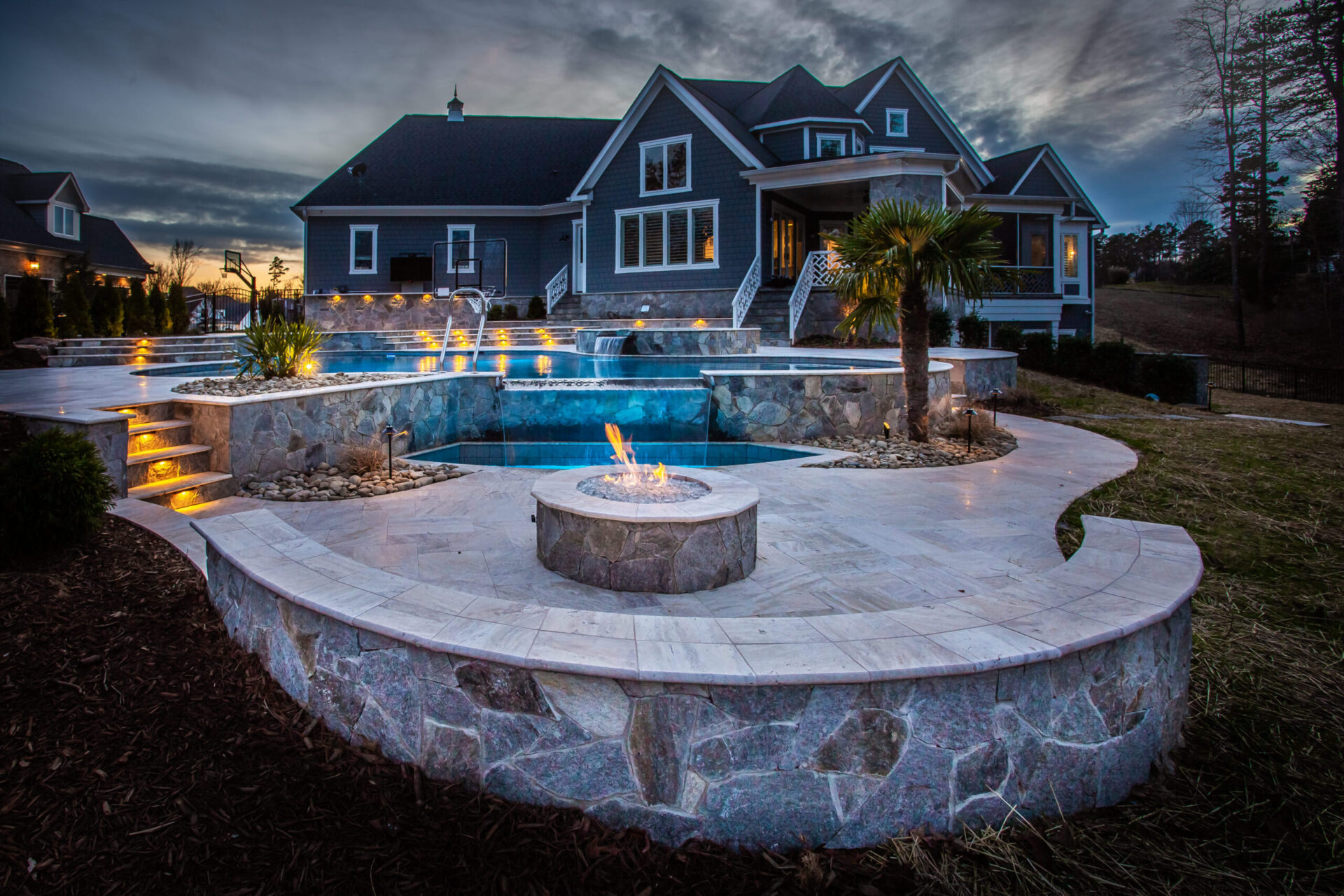
- Upscale features: With a custom-built gunite pool, you can incorporate additional features such as waterfalls, underwater benches, and seating. These upscale additions enhance both the aesthetic and functionality of your outdoor space.
- Durability and longevity: When properly maintained, gunite pools offer exceptional strength and longevity, making them a sound long-term investment that can last for 50-100+ years with proper care.
Cons
- Higher upfront investment: Gunite pools require a higher upfront investment because they must be constructed on-site by highly skilled workers. However, long-term their durability can make them a better value compared to fiberglass.
- Longer installation time: Due to their custom nature, gunite pools take longer than fiberglass pools to build, about 8-16 weeks on average. When planned in advance, pool builders can work with you to get started on a new pool earlier in the spring so that it’s ready for summer.
Fiberglass pool pros and cons
Fiberglass pools bring their own set of benefits and considerations that are worth exploring.
Pros
- Initial cost: Fiberglass pools sometimes have a lower upfront cost than gunite pools, but newer gunite pools are often comparable in price when all factors are considered. Long-term maintenance costs can make fiberglass more expensive..
- Faster installation process: Due to their pre-manufactured design, fiberglass pools can be installed quickly—often becoming usable within days.
Cons
- Shorter lifespan: Compared to gunite pools, fiberglass pools typically have a shorter lifespan and require more maintenance, which impacts longevity and costs over time.
- Limited customization: Fiberglass pools come in fixed shapes and sizes due to their factory-molded design, limiting a homeowner’s customization options. This also limits additional features that can be added.
Key differences in gunite vs fiberglass pools
As stated above, there are key differences between gunite and fiberglass pools that may determine your selection, including pricing, customization, and return on investment. Here’s a side-by-side comparison:
- Cost: Many believe gunite pools, with their fully customizable design, sometimes represent a larger upfront investment, which can cost $40,0000 to $120,000 or more. But, today, when all is said and done, fiberglass pools, typically cost about $40,000+. However, long-term gunite pools offer better value due to superior durability and lower maintenance costs.
- Maintenance: Outside of regular cleaning and chemical balancing which applies to both pool types, gunite pools require replastering every 8 to 20 years while fiberglass pools require gel coat refinishing and crack repairs every 7 to 10 years.
- Design: Gunite pools offer complete customization to fit your backyard and family’s unique needs, allowing for entirely bespoke designs, while fiberglass pools come in pre-set, standardized shapes and sizes.
- Installation: Fiberglass pools are engineered for rapid installation, often being ready to use in just a few days, whereas gunite pools require a longer installation process that can take 8-16 weeks due to their custom-built nature.
- Lifespan: With proper care, a gunite pool can last 50 to 100 year, making it a long-lasting investment, whereas a fiberglass pool generally has an average lifespan of 20 to 30 years.
Get a quote for a gunite or fiberglass pool from Anthony & Sylvan
Whether you’re dreaming of a fully customized gunite pool or a fiberglass option, Anthony & Sylvan is here to help turn your backyard vision into reality. With pool expertise dating back to 1946, our team is ready to guide you through every step.
Ready to take the plunge? Contact us today for a personalized quote and expert advice, and discover how a great pool can transform your home into a luxurious retreat.
FAQs about gunite vs fiberglass pools
What designs, shapes, and sizes are available for gunite and fiberglass pools?
Gunite pools offer near limitless design possibilities, as they are built on-site and fully customizable to your unique preferences. Homeowners can determine every detail—from the size, shape, and depth to unique features like waterfalls, grottos, and in-water bench seating—ensuring the pool fits perfectly with the surrounding landscaping and your personal vision.
Fiberglass pools are pre-built in a factory, meaning their shapes and sizes are predetermined and less flexible. This streamlined, pre-set approach results in faster installation and lower maintenance, but offers fewer customization options compared to gunite pools.
How does installation differ between gunite and fiberglass pools?
Fiberglass pools are pre-built in a factory, which makes their installation quick and straightforward. Once the site is excavated to match the pool’s dimensions, the pre-manufactured shell is lowered into place and connected to plumbing and electrical systems, often allowing homeowners to enjoy their pool in just a few days.
In contrast, gunite pools are custom-built on-site, resulting in a more complex and time-intensive installation process. Skilled professionals work together to spray the concrete mixture over a rebar framework while incorporating unique features, meaning that the complete build can take 8-16 weeks, depending on the level of customization.
Do gunite pools last longer than fiberglass pools?
Both gunite and fiberglass pools are designed to be long-lasting, but gunite pools are renowned for their exceptional durability. With proper maintenance, a gunite pool can last 50 to 100+ years, making it a truly lifelong investment.
Fiberglass pools typically have a lifespan of 20 to 30 years. Their pre-molded, nonporous surface provides a low-maintenance, quick-install solution, but the trade-off is that they generally don’t match the long-term durability of gunite pools.