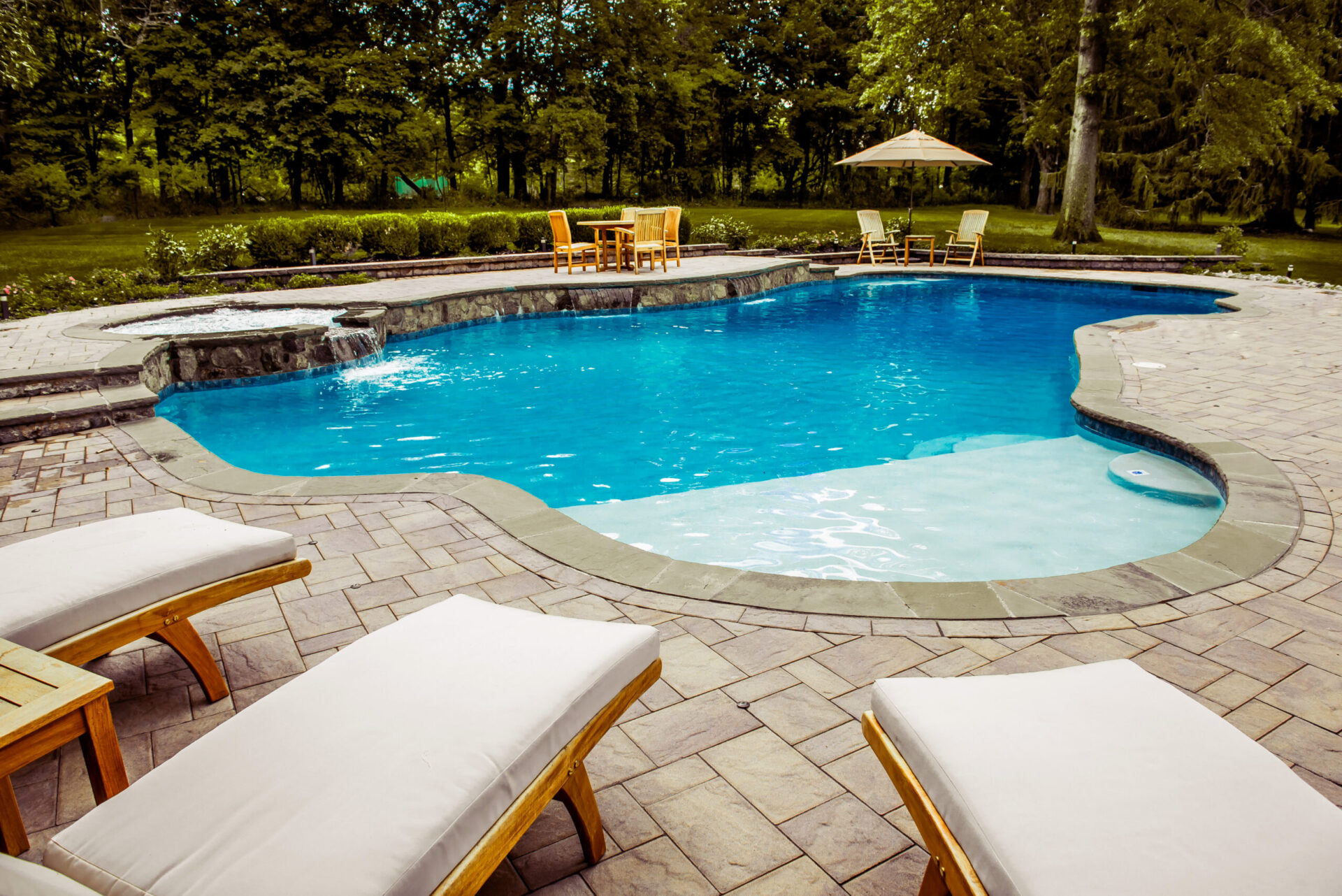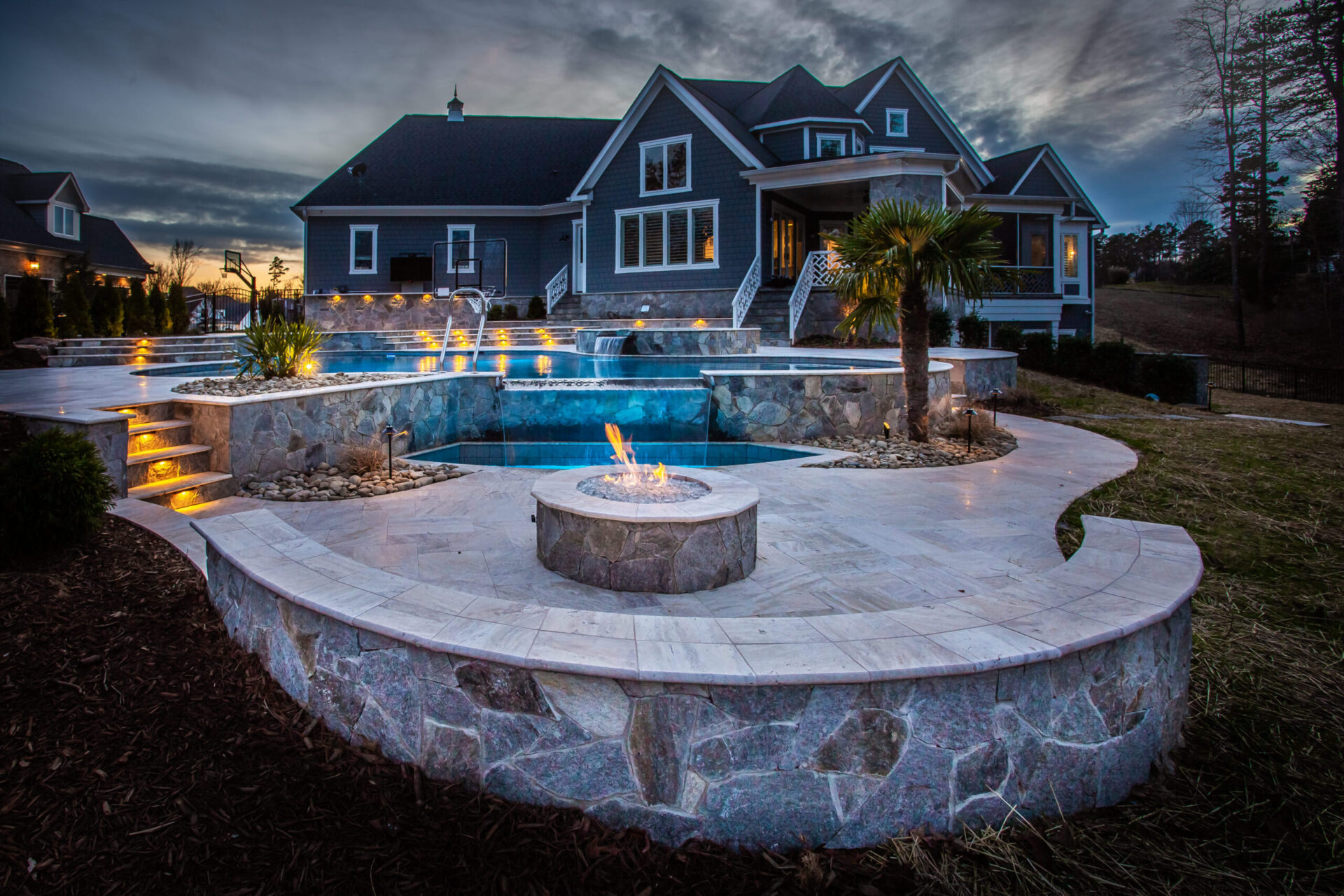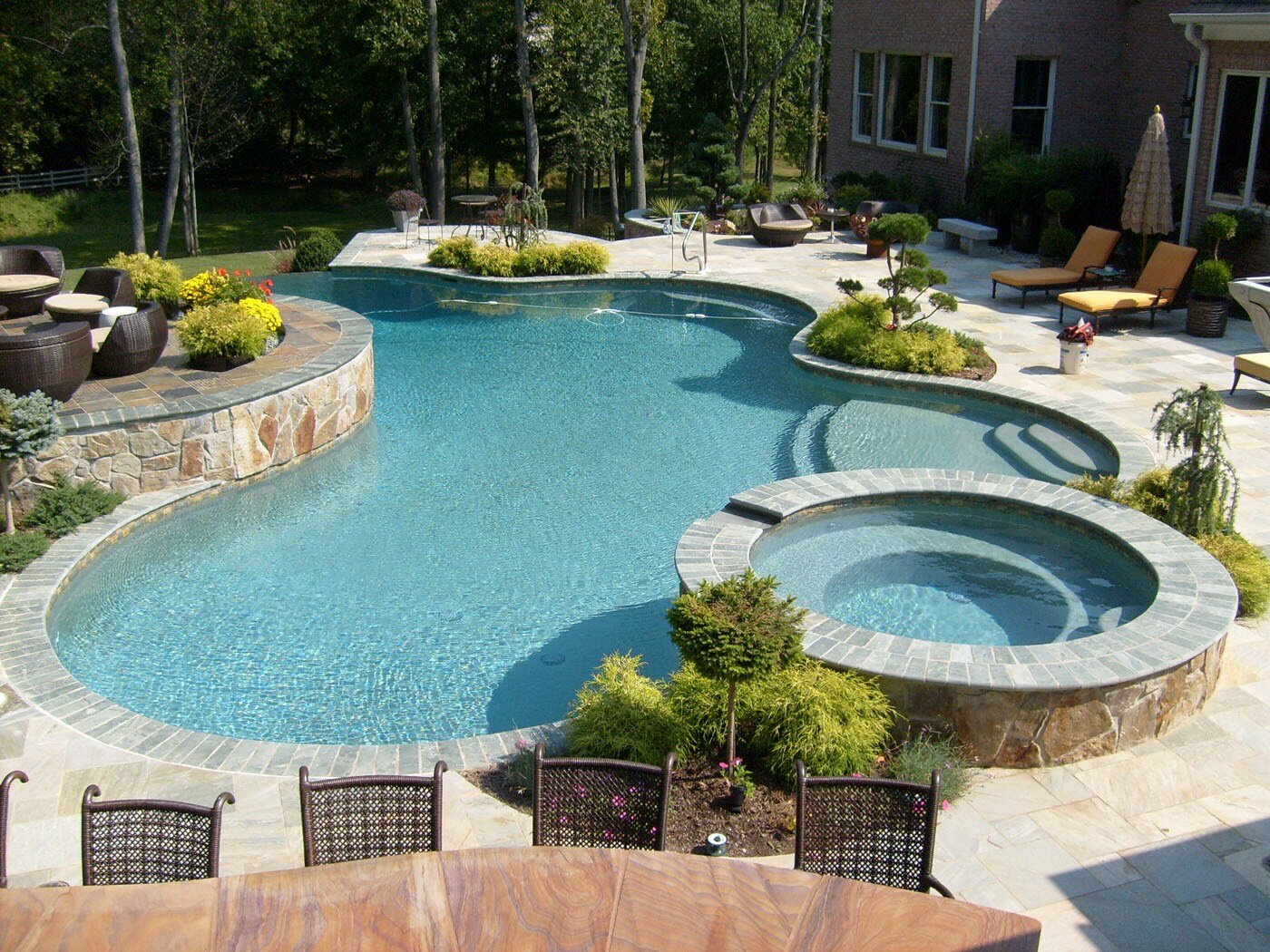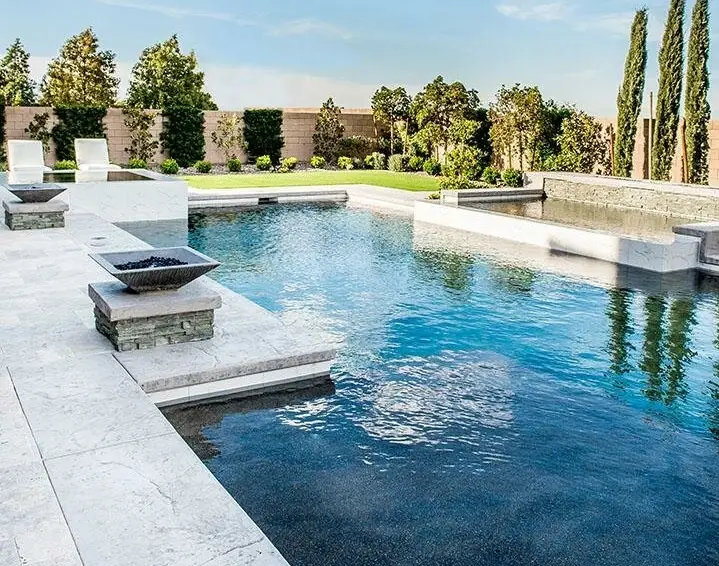
Concrete swimming pools are a popular choice for homeowners who want long-term durability, design flexibility, and a fully customized backyard experience. Built on-site and tailored to each property, they offer a level of personalization that other pool types cannot match.
In this guide, we will cover:
- The average cost of a concrete pool
- The pros and cons of concrete pools
- The step-by-step process of designing and building your pool
- How to maintain your pool
- How concrete compares to fiberglass and vinyl pools
What is a Concrete Pool and How Much Does it Cost?
A concrete swimming pool, often referred to as a gunite pool, is constructed by spraying a mixture of cement, sand, water, and aggregate over a reinforced steel framework. This process creates a solid, permanent shell that can be shaped into virtually any size or design.
Homeowners typically choose concrete pools for their strength and design flexibility. Unlike pre-molded options, concrete pools are built entirely on-site, making them ideal for custom features such as infinity edges, tanning ledges, integrated spas, and freeform shapes. They are also well-suited for properties with uneven terrain or unique layouts.
Shotcrete vs Gunite
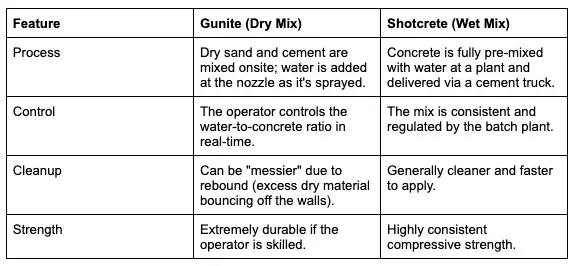
In the pool industry, “concrete” is a broad term that includes both gunite and shotcrete. The primary difference lies in how the material is mixed and applied. Both methods can produce a durable, long-lasting pool when installed by experienced professionals, but differ in process, control, cleanup, and strength.
How Much Does a Concrete Pool Cost?
The cost of a concrete pool can vary widely depending on the project scope. Most homeowners can expect a starting cost between $40,000 to $120,000 or more depending on several factors such as:
- Pool size and depth
- Custom features (spas, waterfalls, lighting)
- Site conditions, such as slope or soil type
- Finishes, materials, and surrounding patio design
Because every concrete pool is built to specification, there is no one-size-fits-all price. Pricing can also vary significantly based on location, labor, and materials, so reviewing pool pricing by region can provide helpful context beyond general estimates. The most accurate way to understand cost is to consult with a local pool builder who can evaluate your property and design goals.
What are the Pros and Cons of a Concrete Pool?
Concrete pools offer distinct advantages, but they also require a greater investment of time and maintenance. Understanding both sides can help guide the decision-making process.
Pros
Customizable
Concrete pools provide nearly unlimited design flexibility. Homeowners can incorporate features such as vanishing edges, beach entries, integrated seating, and unique shapes that align with their landscape.
Durable
With proper construction and care, concrete pools can last for 50-100 years. The reinforced structure resists wear from weather, heavy use, pets, and pool equipment.
Aesthetic Appeal
Concrete pools are often considered the most visually refined option. Their ability to accommodate high-end finishes and intricate designs allows for a tailored, architectural look.
Best for Challenging Terrain
Because they are built on-site, concrete pools can adapt to sloped yards, tight spaces, or complex layouts where pre-formed pools may not fit.
Cons
Longer Construction Timeline
Concrete pools typically take 8-16 weeks to build, depending on weather, permitting, and project complexity.
Higher Upfront Investment
The upfront cost of a concrete pool is typically higher than that of a vinyl or fiberglass pool. However, long-term concrete pools offer superior durability that makes them a better value over time.
How Are Concrete Pools Made?
Building a concrete pool is a multi-phase process that requires coordination, precision, and time. Below is an overview of the typical steps involved.
1. Design & Permitting
Designers create a detailed 3D model of the pool and surrounding space, allowing homeowners to visualize their dream pool and make adjustments before construction begins. Once a design is agreed upon, the pool builder will help or handle permitting.
2. Site Prep & Excavation
Prior to building, the site will need to be prepared which involves clearing the area of trees and rocks, then marking utility lines. After the site is prepped, the pool area is excavated so construction can begin.
3. Plumbing & Steel Placement
A network of steel rebar is installed to form the structural framework, along with plumbing lines for circulation, filtration, and water features.
4. Shell Placement & Curing
Concrete is applied using gunite or shotcrete, forming the pool’s structural shell. The concrete shell must cure properly to achieve maximum strength. During this period, it is regularly watered to control moisture levels and reduce the risk of cracking.
5. Tile & Coping
Tile is installed along the waterline, and coping (the edge of the pool) is added for both function and visual appeal.
6. Patio & Decking
The surrounding patio or deck is constructed, integrating the pool into the overall outdoor space.
7. Equipment Installation
Once the pool and decking is completed, electrical equipment is installed including pumps, filters, heaters, and lights.
8. Plaster & Interior Finish
The interior finish is applied, which may include plaster, quartz, or pebble surfaces. This layer determines the pool’s final appearance and texture.
9. The Fill & Chemistry Set-Up
The pool is filled with water and initial chemical levels are balanced to ensure safe operation.
10. Final Inspection
With everything done, your municipality may require you to do a final inspection, though it’s recommended even if your area doesn’t require one. A final inspection ensures your pool is well-constructed prior to use, which can help avoid issues in the future.
Pool Materials: Concrete vs. Fiberglass vs. Vinyl
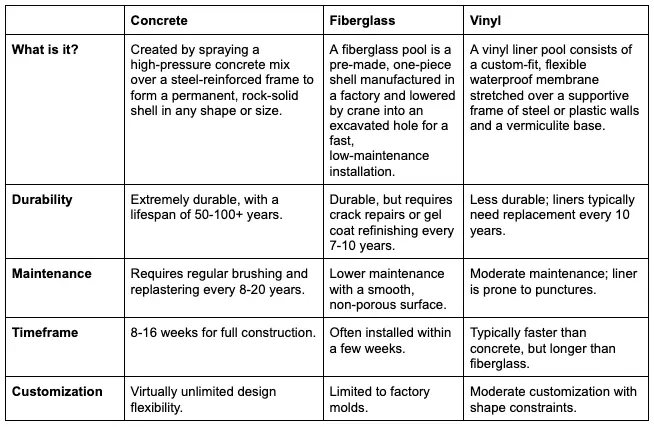
For homeowners comparing options, understanding the differences between inground pool materials is essential for balancing cost, maintenance, and design goals.
Long-Term Care: How to Maintain Your Concrete Pool
Maintaining a concrete pool involves consistent attention to water chemistry, cleaning, and equipment. Weekly testing and balancing of pH, chlorine, and alkalinity levels are essential to prevent algae growth and protect the pool surface, while routine debris removal helps maintain water clarity. Many homeowners choose to simplify upkeep with automated solutions such as robotic cleaners or integrated systems. Exploring different pool cleaning systems can help streamline maintenance and improve long-term water quality.
The surrounding concrete, such as the deck and coping, also requires care. Periodic cleaning helps prevent staining and buildup, while sealing the surface can protect against moisture penetration and weather-related wear. Over time, inspecting for cracks or surface changes ensures that small issues are addressed before they become larger repairs.
Frequently Asked Questions
How long does a concrete pool last?
A well-built concrete pool can last 50 to 100+ years, far longer than fiberglass or vinyl pools.
Is it cheaper to build a concrete pool?
Concrete pools are typically more expensive upfront than vinyl, but are often comparable to fiberglass when all factors are included. Concrete pools do offer greater customization and long-term durability, which can influence overall value over time.
How long does it take to build a concrete pool?
Most concrete pools take between 8-16 weeks to complete. The timeline depends on factors such as weather, permitting, and project complexity.
Design and Build Your Custom Inground Concrete Pool with Anthlny & Sylvan
Anthony & Sylvan is America’s most trusted pool builder with experience working on over 1 million pools since 1946, and we have the expertise to make any vision come to life. Contact us for a free consultation, where we’ll explore design options and provide a 3D rendering and quote.