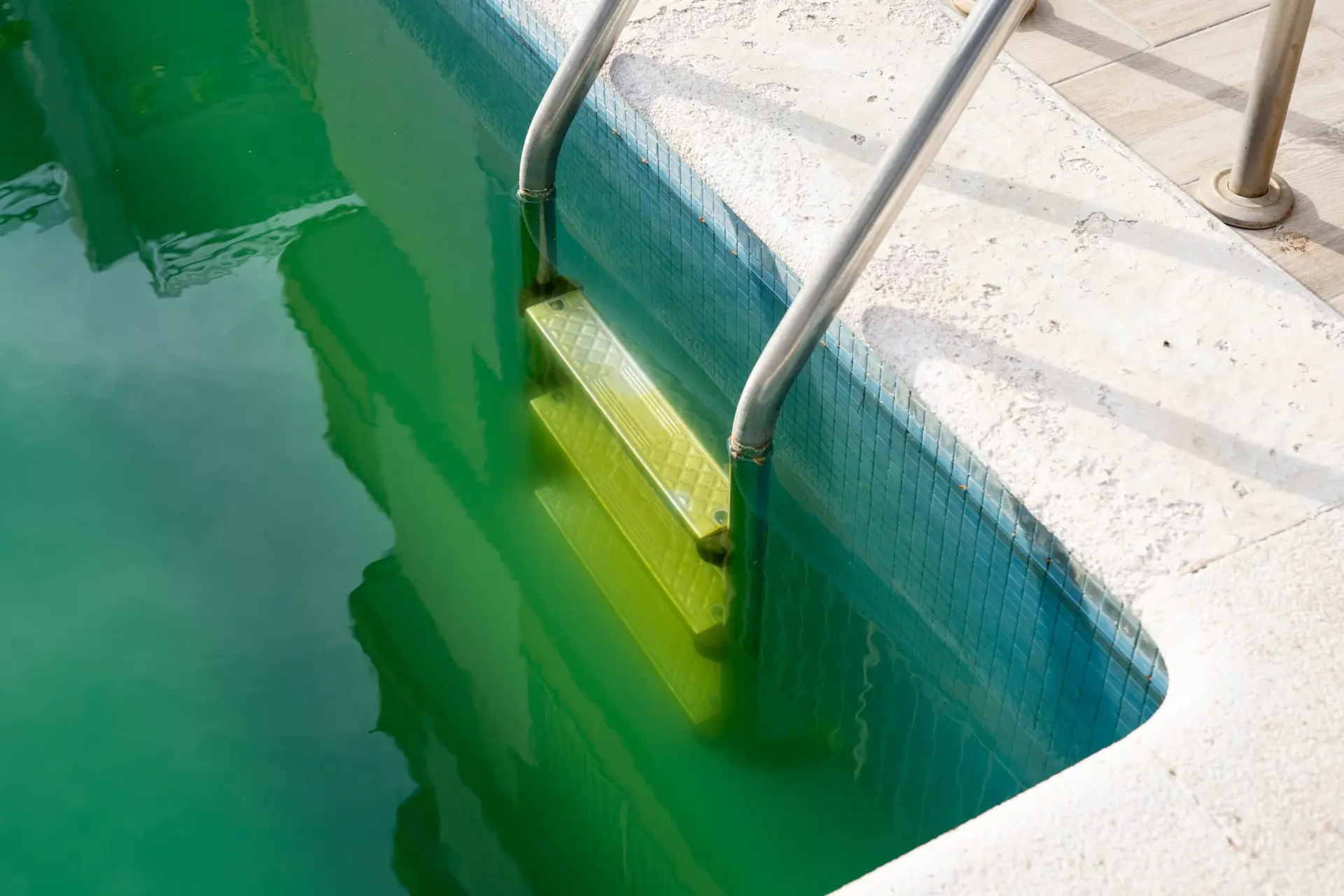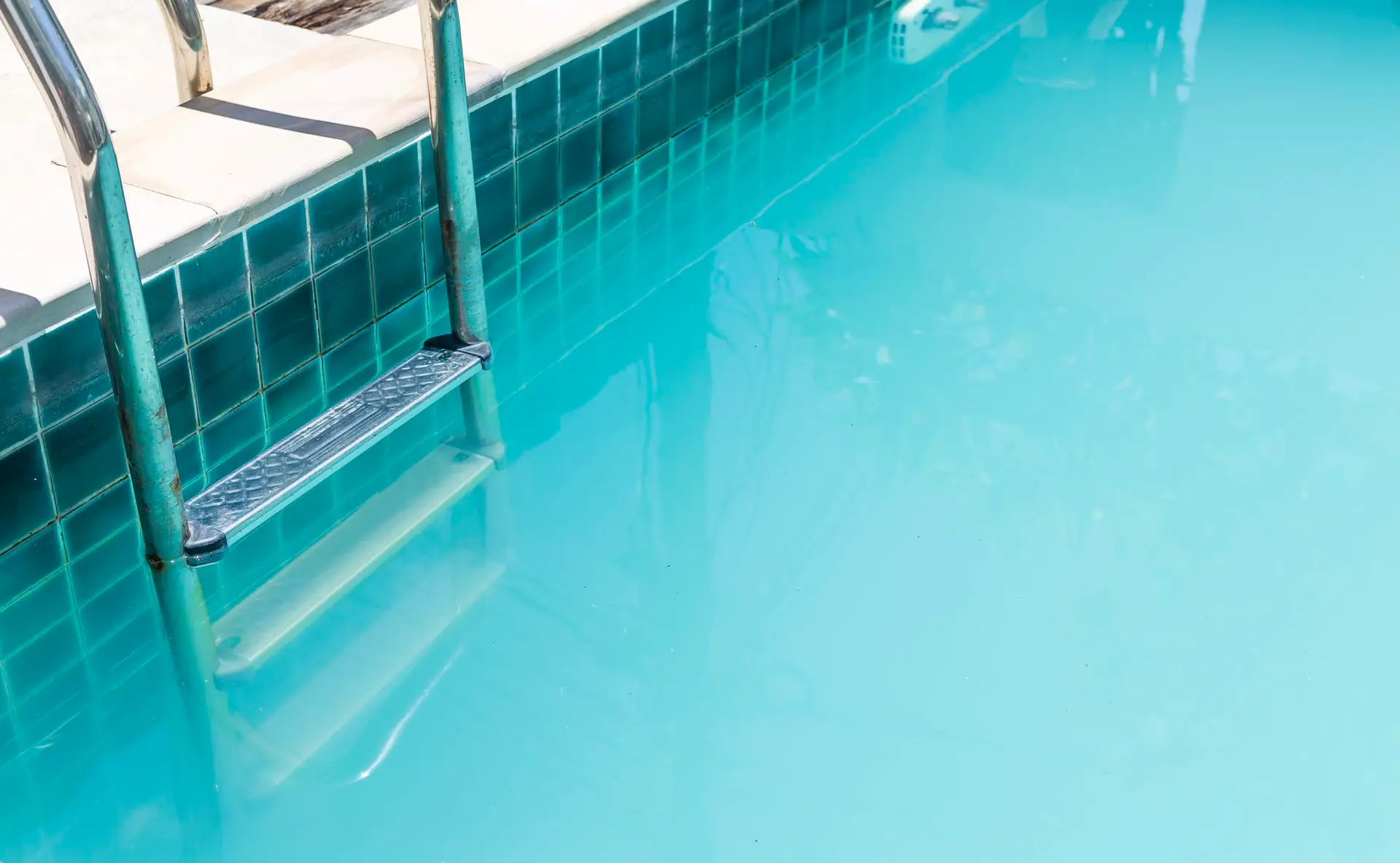
Cloudy water is a common pool issue that’s caused by particles getting stuck when your filter can’t remove them by itself. The issue generally stems from unbalanced water chemistry or a problem with the filter, but luckily it’s easy to fix.
In this guide, we’ll walk through the most common causes of cloudy pool water and how you can clear it.
Causes of Cloudy Pool Water
Unbalanced water chemistry or an issue with the pool’s filter are usually the culprits behind cloudy water, but other issues can be factors, and often several causes contribute to the problem.
1. Poor Filtration or Circulation
Your pool filter removes dirt, oils, dead algae, and other small particles from the water. However, a clogged filter or even one that’s just dirty can prevent it from capturing particles as water passes through, keeping them in your water and making it cloudy.
Check the skimmer and pump baskets for clogs, make sure water is flowing normally from the return jets, and clean or backwash the filter if needed. You also need to run your filter long enough to ensure the water is circulating well, typically 8 hours a day or more depending on the size of your pool.
2. Low Chlorine Levels
Chlorine breaks down bacteria, algae, oils, and other contaminants that enter the water. When the chlorine level is too low, those contaminants can accumulate faster than your pool can remove them, leading to hazy or cloudy water.
Test the chlorine level and bring it back within the recommended range for your pool. If the water has become very cloudy or you notice signs of algae, you may need to shock the pool by adding chemicals to raise the chlorine level enough to address the contaminants.
3. High pH or Alkalinity
High pH or alkalinity can make your pool water cloudy and reduce how effectively chlorine works. For most pools, you should aim for a pH around 7.4–7.6 and total alkalinity between 80–120 ppm.
If either level is too high, use chemicals to gradually bring it back into the right range. Allow the water to circulate after making adjustments, then retest before adding anything else.
4. High Calcium Hardness
Calcium is a mineral, and adding too much to your pool water can give it a milky or hazy appearance. Over time, these minerals can accumulate scale buildup on pool surfaces and equipment that makes them harder to clean and causes damage.
Test your calcium hardness along with pH and alkalinity to determine whether mineral buildup is contributing to the cloudiness. Depending on how high the calcium level is, you may need to rebalance the water or partially drain and refill the pool.
5. Algae Growth
Cloudiness can sometimes be the first sign of an algae outbreak before the water changes into another color. Brush the pool walls and floor, remove visible debris, and test the chlorine level. If you notice green, yellow, or black growth on the surfaces, treat the algae promptly before it spreads.
6. Heavy Pool Use, Rain, or Debris
A storm or heavy traffic in the pool can change water conditions quickly. Rain can dilute chlorine and shift pH or alkalinity, while a large number of swimmers introduce additional oils, sweat, sunscreen, and other contaminants.
After heavy rain or pool use, skim out debris and test the water to see if pH, alkalinity, and chemical levels have changed. Rebalance the chemistry as needed and wait for the filter to remove particles before using the pool again.
How to Clear Cloudy Pool Water
After identifying the cause of your cloudy water, follow these steps to clear it. Avoid adding multiple treatments at once, since excessive chemicals can sometimes create more problems.
1. Test the Pool Water
Start by testing your water’s pH, alkalinity, chlorine, and stabilizer levels. This helps you determine whether the cloudiness is being caused by a chemistry imbalance or a non-chemical issue with the pool.
Correct any levels that are above or below the appropriate ranges, then allow the water to circulate before retesting. If your chemistry is already balanced, the problem may be related to filtration, debris, or fine particles that the filter isn’t capturing.
2. Check and Clean the Filter
Look at the filter and skimmer basket to make sure they’re clean and that water is moving freely. Clean the filter based on the type you have and keep the system running while the pool clears. If circulation still seems weak after cleaning, there may be an equipment issue that needs further inspection.
3. Clean the Pool
Skim the pool to remove any debris from the surface, then brush the walls and floors thoroughly to loosen dirt before vacuuming. Removing debris helps keep bad stuff out of your pool, and it helps chlorine to work more effectively so it can prevent cloudiness.
4. Shock the Pool if Needed
Shocking your pool by raising the chlorine level can break down contaminants that make water cloudy, but it should only be done after thorough cleaning. The amount of chemical you need depends on your pool size, its current chemistry, and the shock product you’re using. Follow the product’s instructions carefully and keep the pump running to circulate the treatment.
5. Use a Clarifier or Flocculant
If your water chemistry is balanced and the filter is working properly but the water still appears cloudy, a clarifier can help. Clarifiers bind small particles together into larger clusters that are easier for the filter to capture. For more severe cloudiness, a pool flocculant causes suspended particles to settle on the floor so it’s easy to vacuum them.
Tips for Preventing Cloudy Pool Water
The best way to prevent cloudy water is by keeping your pool chemistry balanced and your filter working properly. Here are a few tips to keep your pool in tip-top shape:
- Keep the water balanced: Test pH, alkalinity, chlorine, and stabilizer regularly so small imbalances don’t turn into bigger issues.
- Run your pump consistently: Run your pump 8-12 hours a day and clean or backwash the filter when needed.
- Remove debris: Skim debris that falls in your pool before it breaks down or gives algae extra surfaces to grow on.
- Clean regularly: Brushing and vacuuming the walls and floor helps keep your pool looking good, and it stops organic buildup that contributes to cloudy water.
Get Clearer Pool Water with Anthony & Sylvan
If you’ve got an issue with cloudy water that isn’t going away, or you prefer to leave it to the experts. Anthony & Sylvan can identify what’s causing the problem and fix it quickly so you can get back to enjoying your pool. With over 80 years of experience, we’ve seen every issue you can imagine and can tackle your challenge. Contact Anthony & Sylvan to schedule a pool service!