When you picture owning a pool, you probably think of long, blissful afternoons spent floating in the clear blue water, a cold drink in hand. The benefits of pool ownership are indeed out of this world. But it takes regular maintenance to keep your pool the sparkling oasis you deserve.
If you’re a beginner, learning how to care for a pool might seem daunting. But trust us: once you establish a routine, you’ll find pool maintenance simple and fun. Caring for your pool will keep it beautiful and functional for years to come. This guide will help you understand the basics of swimming pool maintenance.
Pool maintenance for beginners: Understanding the 3 C’s
Any pool expert will tell you that the health of your pool depends on three major factors: circulation, cleaning, and chemistry. Keeping the 3 C’s in mind is key to understanding how to take care of a swimming pool and how to troubleshoot when issues arise.
Water circulation
Just like the human body, your pool relies on its circulation system for optimal health. Good water circulation is essential to keeping your pool clean and safe for swimming. But how does it work? Your pool circulates water using the following parts:
- Skimmer: Water flows into a skimmer installed in your pool wall. As long as the waterline is about halfway up the skimmer, its basket will capture floating debris, preventing it from clogging the pump.
- Pool pump: The pump is like your pool’s heart: it moves water through the system. Keeping the pump on at least eight hours per day ensures that the water is being thoroughly filtered.
- Pool filter: After moving through the pump, water enters the filter. There are many types of pool filters, but they all catch dirt and debris that is too small to be caught by the skimmer basket.
- Jets: Jets installed in your pool’s walls return water to the pool after it has been filtered. Aiming your jets down and away from the skimmer can help keep all your pool water circulating, even in tricky spots like the deep end or around corners.
The best ways to maintain good pool circulation are to keep your equipment in good repair and to ensure that your pool’s waterline is always halfway up the skimmer so the pump will function properly.
Pool cleaning
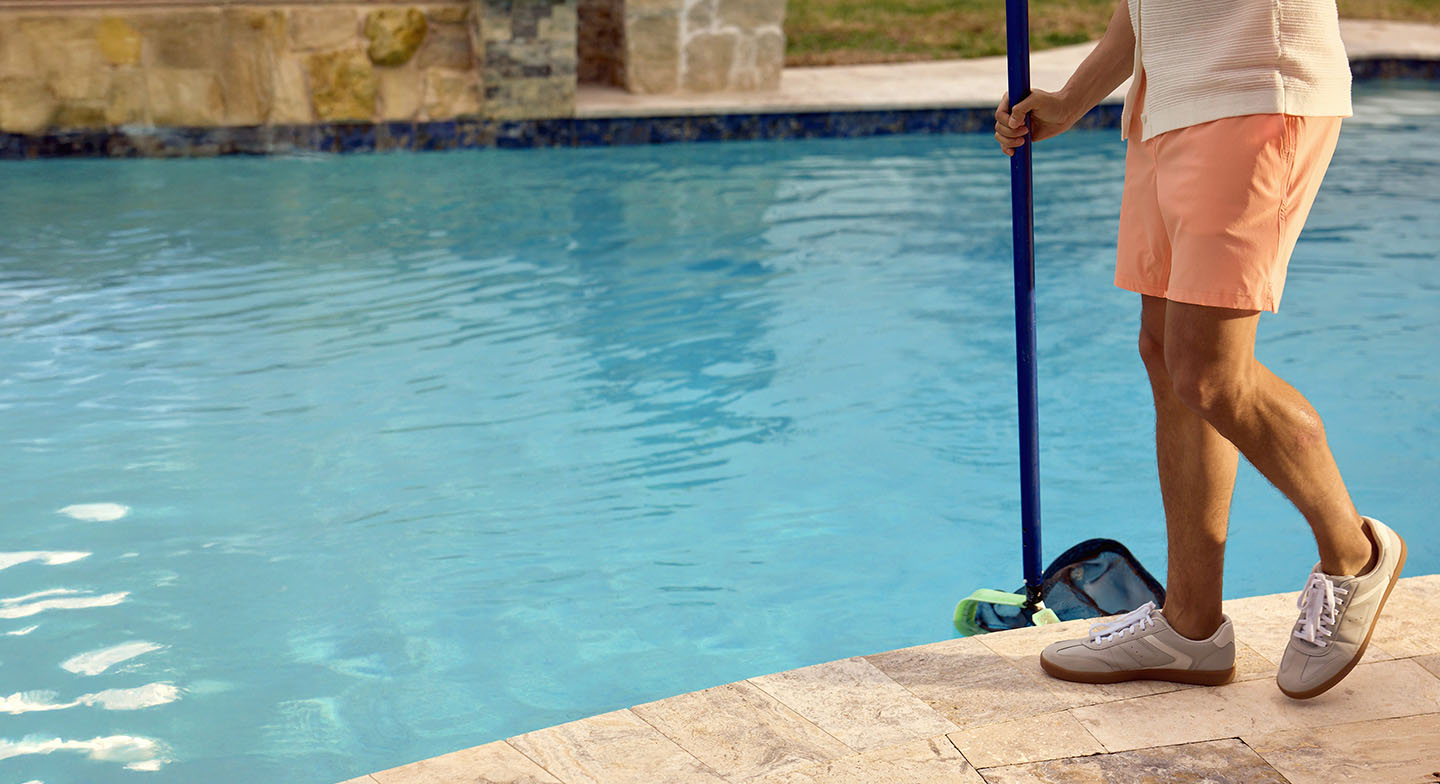
Water circulation can go a long way toward keeping your pool clean, but there’s often just no substitute for a little elbow grease. Skim leaves and debris off the surface of your pool daily, or at least every time you use it. Once a week, vacuum and brush your pool to remove dirt, algae, and bacteria from its floor and walls.
If you don’t want the responsibility of weekly cleaning, consider investing in an automatic pool cleaner or robot cleaner. Or better yet, have an Anthony & Sylvan pool professional clean and vacuum your pool for you!
Pool water chemistry
Monitoring your pool’s water quality and adding chemicals as needed is an important part of keeping your pool safe. However, you don’t need a PhD to master it. An Anthony & Sylvan expert can fill you in on which pool supplies you’ll need to maintain water quality. Each week, take the following measurements and add chemicals to address imbalances:
- pH: The pH scale runs from 0-14. 7 is a neutral pH. If your water’s pH becomes too low (acidic), it can cause corrosion. A high pH (basic) can cause scaling and even render chlorine ineffective.
- Alkalinity: Total alkalinity is a measure of alkaline substances in your pool water. Balancing your pool’s total alkalinity acts as a pH buffer: it prevents pH spikes in either direction.
- Sanitizer: Most pools use chlorine as a sanitizer. Chlorine keeps the water free of bacteria, viruses, and algae and prevents water-borne illness. Too much chlorine can cause eye and skin irritation and make your water too acidic.
- Calcium hardness: Tap water is often described as “hard” or “soft” depending on the amount of calcium in it. Measuring calcium hardness can help you avoid corrosion and scaling.
Your pool’s pH, alkalinity, chlorine, and calcium hardness should be in the following ranges:
Measurement | Ideal Range | Frequency |
pH | 7.2-7.6 | weekly |
Total Alkalinity | 80-150 ppm | weekly |
Chlorine | 1-3 ppm | weekly |
Calcium hardness | 200-400 ppm | monthly |
Pool shocking: What you need to know
Shocking your pool is much more than just a quick fix for contamination. It prevents algae, bacteria, and compounds called chloramines from building up in your pool, something that can’t always be prevented with other types of chemicals. Shock your pool every week or two. Add additional shock during heat waves, after extreme weather, or after a pool party.
An Anthony & Sylvan pool expert can advise you on the best type of shock for your pool. Always shock your pool at night, brush the pool walls after treatment, and run the pump for at least eight hours to circulate the chemicals well.
6 essential pool care tips
Ready to maintain your pool but not sure where to begin? These tips will have your water sparkling in no time!
1. Test your pool water’s pH every week
To better understand your pool’s water quality, use pH strips to test the water once per week. The simplest strips just test for pH, but many strips can give you additional information about your water, including calcium hardness, total alkalinity, and chlorine levels. An Anthony & Sylvan pool expert can perform water testing for you if you prefer leaving the chemistry to the pros.
2. Use a pool cover
Installing a cover on your pool during the off-season can extend the lifespan of your pool. Covers retain heat and prevent water evaporation, which can also save you money. Finally, solid covers can keep dirt and debris out of the water and prevent algae growth as well. Talk to an Anthony & Sylvan professional about what type of pool cover best meets your needs.
3. Backwash your pool filter every other week
Backwashing cleans your filter by running water backward through it to flush out dirt and debris. It ensures that your filter and pump will continue working effectively. You’ll know that it’s time to backwash when the filter pressure is 10 psi higher than it was immediately after your last backwash. You’ll likely need to backwash once or twice per month.
4. Always shock your pool at night
Shocking your pool is an important part of weekly pool maintenance, and it’s important to do so when you suspect the pool may have been contaminated. Sunlight can burn off unstabilized chlorine, so shocking your pool in the daytime hours could be ineffective. Wait until dark to add shock; then run the pump for at least eight hours to circulate it.
5. Keep your pool water level
Your pool’s water level should always be about halfway up the skimmer. This allows the skimmer to catch debris in its basket as your pump circulates the water. If the water level gets too high, the skimmer will be ineffective. If the water level gets too low, the pump will suck in air rather than water, which could cause a catastrophic malfunction.
Add water to your pool by simply placing your garden hose under the surface and turning it on. If your water level is too high, drain it from your filter’s multiport valve or with a submersible pump. Always balance your pool’s chemicals after adjusting the water level.
6. Create a maintenance schedule
Pool maintenance is only effective if it’s consistent. With a schedule in place, it’ll become a simple part of your routine in no time. Most pool care tasks should be done weekly, so choose a day each week when you usually have a little free time to spend outside. And when it comes to opening your pool in the spring and closing it in the fall, you don’t have to go it alone — Anthony & Sylvan offers professional pool opening and closing services to make the seasonal transition smooth and hassle-free.
Swimming pool maintenance checklist
The easiest way to stay on top of pool care is to create a regular routine. Post this checklist on your refrigerator or tape it to your back door as a handy reminder of the basics.
Daily
- Skim the pool’s surface with a skimmer net.
- Check the skimmer basket for large debris.
- Run the pump for at least 8-12 hours per day.
Weekly
- Brush the pool’s walls, steps, ladders & jump board.
- Vacuum the pool floor or allow a robotic cleaner to do the work for you.
- Check your pool’s water level and adjust as needed.
- Check the pool’s pH, alkalinity, and chlorine levels and add chemicals as needed.
- Add shock and algaecide every week or two, depending on pool use.
Monthly
- Clean out the pool pump basket.
- Check the filter pressure once or twice a month and backwash the filter as needed.
- Check calcium levels and add chemicals as needed.
- Inspect the pool, its equipment, and your pool deck for damage.
- Have an Anthony & Sylvan professional clean, inspect, and balance your pool.
Annually
- Disassemble and thoroughly clean your pool’s filter.
- Install your pool cover in the fall and remove it in the spring.
- Schedule a pool inspection in the spring to prepare for the summer season.
- Call Anthony & Sylvan for any necessary equipment repairs.
Seasonal pool maintenance
Spring
It can be tempting to dive into your pool on the first hot day of the year, but not so fast! Setting aside a day or two to open your pool for the season ensures that it is safe and clean for swimming. Begin opening your pool by removing its cover. Then, visually inspect your pool, its equipment, your deck, and your pool accessories for any issues that may have arisen during the colder months.
Adjust the water level to halfway up the skimmer plate; skim, brush, and vacuum your pool; and clean your filter as directed. Finally, test and balance the water, add shock, and run the pump overnight to circulate. You might call Anthony & Sylvan to schedule an inspection before sending out the invitations to your first pool party.
Fall/Winter
When the days get shorter, it’s time to close your inground pool for the winter. Closing your pool properly will help you prevent equipment breakdowns and water contamination in the off-season. If you are planning any repairs or renovations, take care of them now.
To close your pool, deep-clean your pool and filter. Then test your water and balance the chemicals. After the pump has circulated the chemicals, turn off and drain the pool equipment, lower the water level below the skimmer, stow away your pool accessories, and cover your pool.
Essential pool maintenance tools
Contrary to popular belief, you don’t have to spend thousands of dollars on equipment to make your pool sparkle. These essential tools will set you up for pool care success.
- Skimmer net: A skimmer net attaches to a long telescopic pole that makes it easy for you to catch floating debris in your pool.
- Pool brush: Many pool brushes can attach to the same pole you use for your skimmer net. Brushing the pool reduces algae and scale buildup on your pool’s walls.
- Pool vacuum (manual or automatic): Whether you vacuum your pool’s walls by hand or rely on a robotic cleaner, weekly vacuuming will keep your pool hygienic.
- Pool pump timer: Many of us can’t afford to run the pool pump continuously year-round. If you don’t want to manually turn the pump on and off every day, invest in a timer that will keep it running at least 8 hours per day.
- Cover: Depending on your priorities for your pool, you may choose a solid or a mesh cover. Pool covers protect your water from contamination, trap heat, and prevent evaporation, saving you water and electricity.
- pH test strips: Test strips make it easy to understand your pool’s pH at a glance. Many test strips can also be used to monitor other important factors like total alkalinity, chlorine, and calcium hardness.
- Chemicals: If you aren’t sure what chemicals you need for your pool, an Anthony & Sylvan expert can help you understand how to respond to all types of water quality issues with confidence.
- Gloves and goggles: Pool chemicals can be dangerous, so it’s important to wear PPE when you are handling them. Be sure to store them out of reach of kids and pets, too.
- Filter accessories: Depending on the type of pool filter you own, you may want to keep extra parts on hand. For instance, a diatomaceous earth filter will require a fresh layer of DE whenever you backwash.
Let Anthony & Sylvan Pools take care of your pool maintenance needs
Pool maintenance doesn’t have to be overwhelming — especially when you have the right team on your side. At Anthony & Sylvan Pools, we make it easy to keep your pool clean, clear, and ready for relaxation. Our experienced professionals handle the hard work so you can spend more time enjoying your backyard oasis.
Whether you need:
Anthony & Sylvan is your one-stop shop. Let us take care of your pool, so you can focus on soaking up the sun.. Contact an Anthony & Sylvan Pools location near you or schedule a pool maintenance service today!