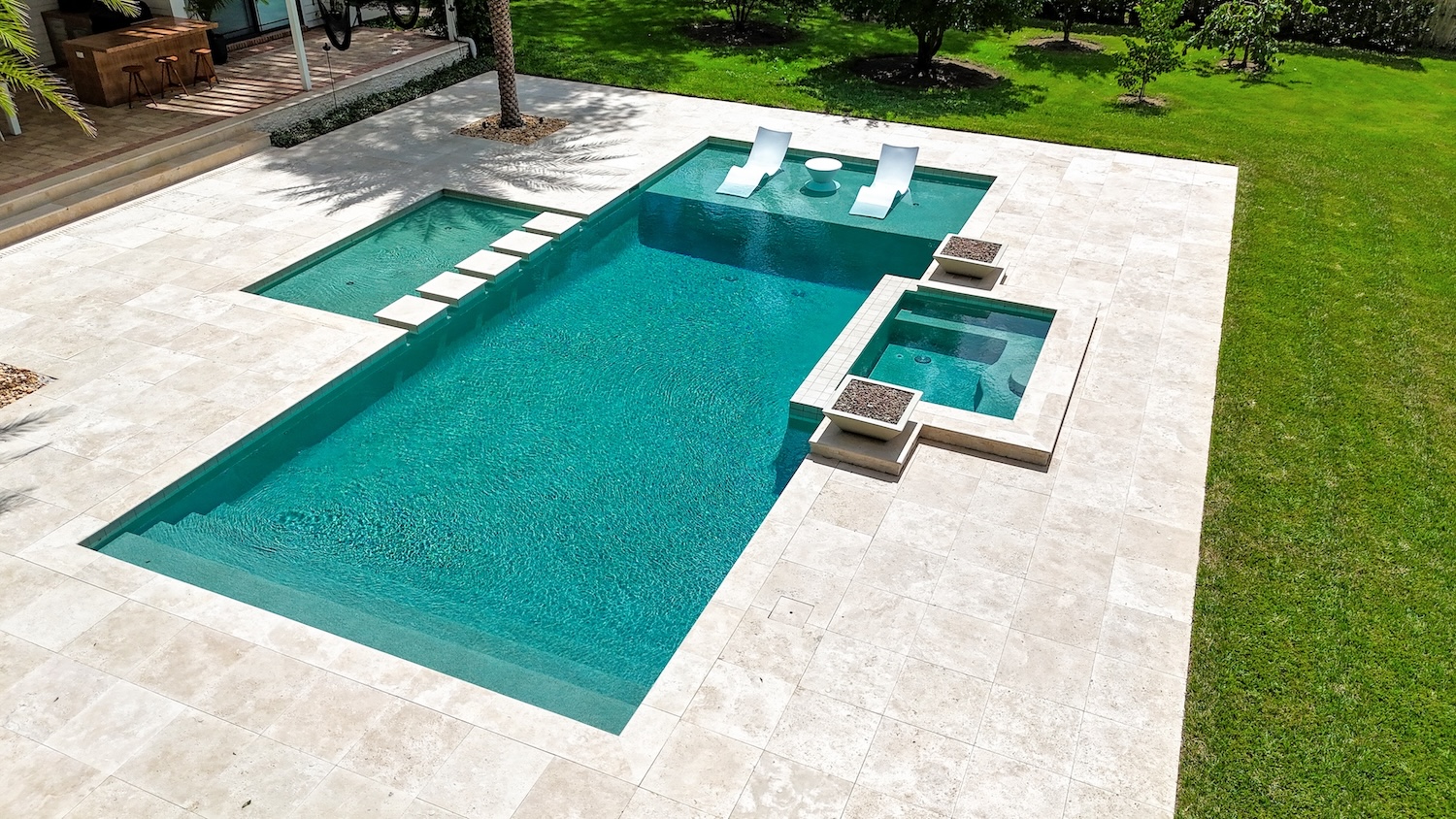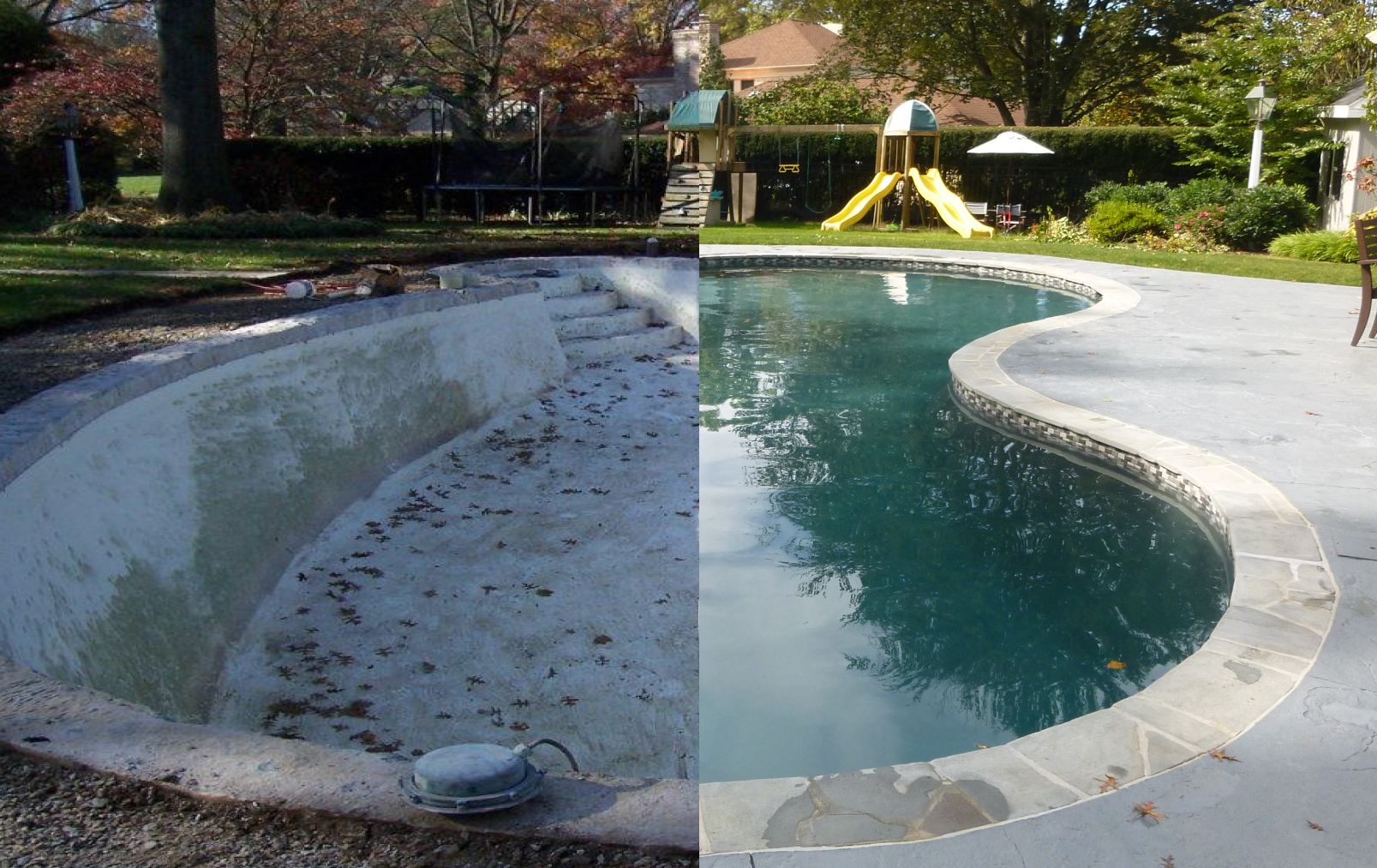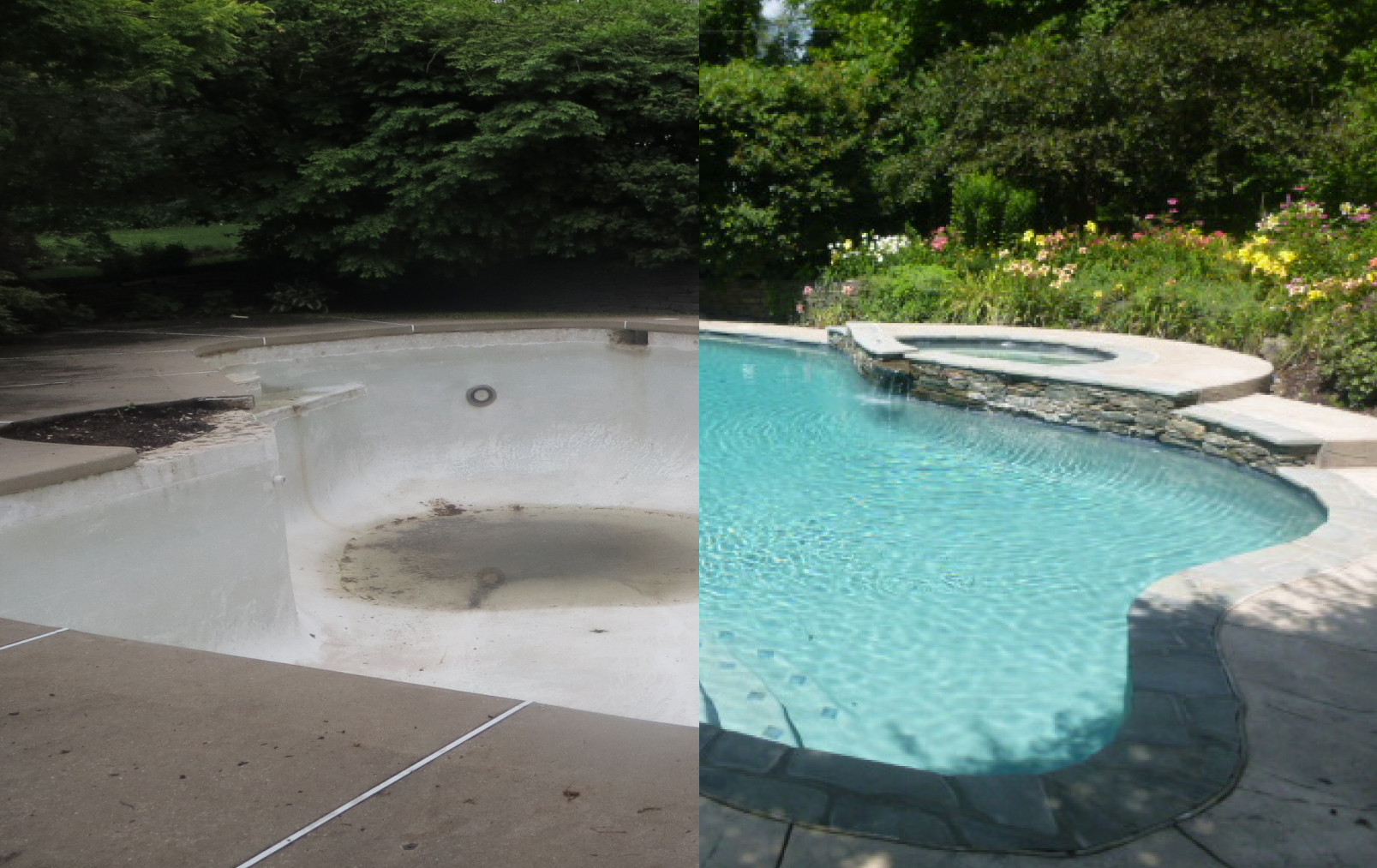
Is your pool in need of a makeover? Estimate pool renovation costs with our handy guide!
On a hot summer’s day, there’s nothing more refreshing than diving into a swimming pool, and nothing more frustrating than having a pool but being unable to use it because it needs work. Remodeling a pool can return it to its former glory or totally upgrade your backyard, but then the question arises: How much does a pool remodel cost?
The short answer is that not all pool remodels are created equal. Minor upgrades might cost you just a few hundred dollars, while a complete redesign could run $150,000 or more. The long answer is in this guide, which we’ve created to help you understand the factors determining pool renovation pricing so that you can estimate how much it will cost to remodel your pool.
How Much Does It Cost to Remodel a Pool?
The average swimming pool remodel costs between $5,000-$30,000+. However, the actual price you will pay depends on many factors, including the size and type of your pool and the complexity of your project. The best way to budget for your upcoming pool renovation is to get several on-site estimates from pool renovation experts near you.
Factors that Influence Pool Remodeling Costs
You can approximate the cost of remodeling your pool by understanding the most common and important remodeling needs.
Pool Type
The first factor a contractor considers when estimating the cost of your pool remodel is the type of pool you have, as there’s a difference for inground vs. above-ground pools. Above-ground pools are typically cheaper to renovate than inground pools because their parts are less expensive and easier to access. The average cost for an above-ground pool remodel is $5,000-10,000.
Inground pools are more durable than above-ground pools and provide more opportunities for customization. The average cost for an inground pool remodel is $6,000-30,000, but the need for repairs is less likely, particularly if you have a concrete (gunite) pool.
Pool Size
It should come as no surprise that larger pools are more expensive to remodel than smaller pools. Bigger pools require more materials and more labor. Contractors price some projects—like resurfacing, painting, and tiling—by the square foot. Other projects, like step repair and coping installation, are priced by the linear foot.
Project Type
The type of project you’re planning for your pool will determine your bill. A minor project—tile repair, LED bulb replacement, or equipment maintenance, for instance—may not be particularly expensive, while large-scale additions, upgrades, or alterations like converting a saltwater to a chlorine pool can cost you thousands.
The most expensive pool renovation projects are typically those that require multiple professionals—a pool electrician and a plumber, for instance—and those that involve heavy machinery.
Labor
Expect labor costs to comprise roughly 40% of your pool remodeling budget. For large projects, your contractor may quote you a total cost for labor, while minor jobs may incur an hourly labor fee. The average hourly rate for a pool remodeling project is $65-100/hr, but these numbers can vary by location, season, and the length and type of remodeling project.
Pool remodeling cost by type of project
Once you’ve decided how to transform your backyard, it’s time to budget. Consider bundling several projects into one remodel: if you’re already going to the trouble and expense of draining your pool, you might want to take care of several renovations at once.
Additions
Additions are upgrades for your existing pool. Adding features can make your pool more fun, attractive, and accessible for guests. Certain features can even make your backyard safer. The average price for pool additions is $300-25,000.
- Water Features: Fountains, waterfalls, and laminar jets can make your pool feel like an enchanted oasis. Waterfalls cost $2,000-9,000 on average: you’ll pay less for sheet waterfalls and more for features made of real stone.
- Lighting: Adding lights to your pool makes late-night swimming safer and more fun. A pool electrician can install lights for around $450-1,700 each. LED lights cost more, but they’re longer-lasting and more energy-efficient than incandescent lights.
- Accessibility Features: If you or someone you love is living with a disability, adding features like lifts and ramps can make your pool more accessible. A sloping beach entry, one of the most popular accessibility features, costs $30,000-60,000.
- Fire Bowl: A fire bowl is the perfect complement to a romantic night swim or an unforgettable pool party. You can have your own for $4,000-8,000, along with a budget for the gas or propane necessary to operate it.
- Heaters and Chillers: Pool heaters allow you to enjoy a swim any time of year, while chillers keep your pool refreshing in the hottest weather. Both heaters and chillers cost around $1,500-5,000.
- Water Purifier: Pool filters and water purifiers come in many varieties. A pool expert will help you understand which will best meet your needs. Most filtration and purification systems cost between $500-2,000.
- Cover: A pool cover isn’t just a convenient way to keep debris out of the water: it’s also an important safety feature that may reduce your need for backyard fencing. Manual covers cost $1,000-4,000, while automatic covers cost $8,000-$20,000.
- Automatic Controls: Imagine being able to control your pool’s lights, heat, filter and water features with a remote or a smartphone app! An automatic control system will cost you around $1,500-3,500.
- Fencing: Many states require a 4-5 ft. tall safety fence around backyard pools. Fencing costs average $10-45/linear foot, though your bill could vary depending on the materials you use. Screen fencing is cheapest; polycarbonate is most expensive.
- Enclosure: A pool enclosure goes over your pool deck and patio, allowing you to enjoy the pool even when the weather is less than ideal. Budget $5-15/square foot or $4,000 to $14,000 total for a new enclosure, though costs may be higher if you use high-end materials like polycarbonate.
| Category | Min Cost | Max Cost |
|---|---|---|
| Water Features | $2,000 | $9,000 |
| Lighting | $450 | $1,700 |
| Accessibility Features | $30,000 | $60,000 |
| Fire Bowl | $4,000 | $8,000 |
| Heaters & Chillers | $1,500 | $5,000 |
| Water Purifier | $500 | $2,000 |
| Cover | $1,000 | $20,000 |
| Automatic Controls | $1,500 | $3,500 |
| Fencing | $10 | $45 |
| Enclosure | $4,000 | $14,000 |
Repair/Replacement
The average cost of replacing or repairing pool equipment and materials is $250-$5,000. Individual repairs rarely cost more than $2,000, but it may be more efficient to perform multiple repairs or replacements at once. The most common pool repairs are to tile, coping, and decking, since those materials wear down faster than other parts of your pool.
- Tile: The cost of tile repair depends on the extent of the project and the type of tile you use. A good rule of thumb is to budget $25-30/sq. ft. It costs around $2,500-5,000 to completely retile the average pool.
- Coping & Decking: If your pool’s coping—the protective border around its perimeter—needs to be repaired, you should budget $30-50/linear foot. Replacing or resurfacing your deck will likely cost between $3,000-12,000.
- Lighting: If your fixtures and bulbs must both be replaced, you’ll pay around $500-1,700 per light. If you just need replacement bulbs, the cost may be lower.
- Steps: Beyond being an eyesore, damaged pool steps can present a safety hazard. Having them replaced or repaired may cost between $200-5,000, depending on their size, the material you use, and the extent of the damage.
- Filter: The cost of a replacement pool filter has to do with its type: sand, diatomaceous earth, or cartridge. This repair will likely cost $250-1,700, though you may pay more if the filter’s plumbing is also damaged.
- Skimmer: You may have a skimmer built into or mounted onto your pool’s walls, or you may use an automatic cleaning system to catch debris. Replacing your skimmer could cost around $3,000, while repairs might run you $1,500.
- Pump: Simply replacing a worn-out pool pump usually costs $300-1,600, but some pool owners choose to upgrade to save on maintenance or energy bills. Automatic chlorination systems cost around $2,000.
- Leaks: Leak repair costs $500-1500 on average, but this price can increase if repairs are extensive, especially if you have a concrete pool. Fixing a pool leak often requires draining and refilling your pool.
- Drain: If your pool’s drain malfunctions, repairs often cost around $400-1,500. Keep in mind that this repair will also require the pool repair team to drain and refill your pool for an additional expense.
- Fencing: If your pool fence has been damaged or worn, repairs often cost between $200-850. Small repairs on fences made of cheaper materials will cost far less than extensive repairs on fences made of materials like polycarbonate or stone.
- Enclosure: Pool enclosures are your pool’s first line of defense against the elements, so it should come as no surprise that they sometimes incur damage. Small enclosure repairs cost around $200-600, while more extensive repairs could run $1,200-3,500.
| Category | Min Cost | Max Cost |
|---|---|---|
| Tile Repair | $25 | $5,000 |
| Coping & Decking | $30 | $12,000 |
| Lighting Repair | $500 | $1,700 |
| Steps Repair | $200 | $5,000 |
| Filter Replacement | $250 | $1,700 |
| Skimmer Repair | $1,500 | $3,000 |
| Pump Replacement | $300 | $1,600 |
| Leaks Repair | $500 | $1,500 |
| Drain Repair | $400 | $1,500 |
| Fence Repair | $200 | $850 |
| Enclosure Repair | $200 | $3,500 |
Resurfacing costs range between $2,000-$15,000
Resurfacing
Many pool owners are surprised to learn that you should resurface your pool every 10-15 years. Doing so makes your pool look great while preventing cracks, leaks and corrosion.
The average cost for resurfacing is $2,000-15,000. The price you’ll pay depends on the size and type of your pool and what material you use. The cheapest and most popular option is plaster, but you can also resurface your pool with pebbles, aggregate, polymer or tile.
Conversions
If your traditional chlorine pool no longer meets your needs, you might consider a pool conversion. But do your research: conversions aren’t all created equal! Some simply require a new filter and different chemicals, while others involve extensive construction. For that reason, conversion prices range from just $500 to $100,000 or more.
- Chlorine to Saltwater: Saltwater pools are gentle on your skin and hair, require less maintenance, and are more environmentally friendly than chlorine pools. Converting an inground chlorine pool to saltwater requires the installation of a saltwater generator, which can cost between $1,000-2,500.
- Chlorine to Natural: A natural pool uses plant life rather than chemicals to filter the water. Converting a chlorine pool to a natural pool costs $50,000-175,000. This conversion often involves excavation because a natural pool must be larger than a traditional pool to accommodate a plant-filled filtration area and a swimming area.
- Pool to Pond: If you want to re-wild your backyard, consider converting your pool to a pond. For $40,000-80,000, a pool expert will excavate your pool, fill it with dirt and aquatic plants, and install new filters and aerators designed to sustain wildlife.
- Shallow to Deep: You might want to make your pool deeper if you’re adding a diving board or want the water to stay cool when the temperature spikes. Adding depth often costs $10,000-50,000 since excavation is required.
- Deep to Shallow: If, on the other hand, you want to make your pool shallower, you’ll pay an average of $4,000-7,000 . This renovation doesn’t require excavation. Rather, a pool expert will fill your pool in with dirt or gravel before resurfacing.
| Category | Min Cost | Max Cost |
|---|---|---|
| Chlorine to Saltwater | $1,000 | $2,500 |
| Chlorine to Natural | $50,000 | $175,000 |
| Pool to Pond | $40,000 | $80,000 |
| Shallow to Deep | $10,000 | $50,000 |
| Deep to Shallow | $4,000 | $7,000 |
Painting
Painting your pool can give it a dramatic facelift. These days, a wide variety of paint colors and styles are available for fiberglass, vinyl and concrete pools. Depending on the size of your pool and the paint you select, painting will likely cost between $1,400-2,500. Painting your pool is more than a cosmetic upgrade: it can also make your pool more durable and easier to maintain.
Painting costs range between $1,400-$2,500
Expansion
As your family or circle of friends grows, you may want to expand your pool. Pool expansion may also allow you to add elements like water features, slides and fire bowls that will make your pool the place to be in the summertime.
Expanding your inground pool typically costs between $20,000-70,000. Expanding a concrete pool involves excavation and pouring new walls for the expanded area, while expanding a fiberglass pool requires the installation of a whole new pool shell and liner.
Expansion costs range between $20,000-$70,000
Reshaping
Changing the shape of your pool involves many of the same processes as expansion, but it can require even greater attention to detail. That’s why reshaping costs $50,000-100,000. If you are remodeling your pool into a standard shape like a rectangle or oval, it may cost less than if you choose a custom pool design. This is especially true for fiberglass pools, which are harder to customize than concrete.
Reshaping costs range between $50,000-$100,000
How to save money on pool remodeling costs
Pool remodel costs can be considerable. Fortunately, many pool remodeling companies offer financing to help you cover the costs. There are also some clever ways to save money on your remodeling project without sacrificing quality. Some pool additions can even keep your maintenance and energy costs down for years to come!
- Bundling: If you’re already tearing up your backyard to repair your pool, why not add a few bells and whistles while you’re at it? Many contractors will reduce the price of your remodel if you bundle multiple repairs and additions.
- Save on materials: Using cheaper materials for your remodel can keep costs down, especially if you’re planning an extensive renovation. For instance, using ceramic tile instead of glass can save you hundreds, and it will still look great.
- Stave off resurfacing with an acid wash: If your pool looks stained or dated but isn’t due for a resurfacing any time soon, a $150-300 acid wash can spruce it up.
- Remodel to save. Consider replacements that are low-maintenance and environmentally efficient. Variable speed pumps, solar heaters and pumps, LED lights, and pool covers can all help you keep energy expenses down.
- Get the job done right the first time. What’s more expensive than one pool renovation? Multiple pool renovations! Though working with a qualified pool contractor may cost more up front, doing so will ensure that your project is done right the first time.
Pool remodeling FAQs
How long does a pool remodel take?
A pool remodel can take between 4-8 weeks, but minor repairs or additions might take just a day or two. Like pricing, it all depends on the type of pool you have and the scope of your project. When you get a price estimate, be sure to ask your contractor for a time estimate, too. The time of year and weather conditions may affect your timeline.
When does it make sense to remodel a pool?
Remodeling makes sense if your pool is no longer an amenity your whole family can enjoy. Whether you make renovations to improve your pool’s safety, appearance, or functionality, your goal should be to get as much use out of your pool as you can for as long as possible.
You might also consider a pool remodel project if you are planning to sell your house. Even having your pool resurfaced can dramatically increase its wow-factor for prospective buyers. A well-maintained pool can increase your home’s value by 5-7%.
Do you need a permit for pool remodeling projects?
If your project requires electrical work, plumbing, or excavation, there’s a good chance that you will need a building permit to complete it. A qualified pool remodeling contractor will be familiar with local regulations and ready to help you navigate the permitting process.
Get a free pool remodeling quote from Anthony & Sylvan Pools
The cost to remodel a pool can vary widely, but even expensive projects can be worth it if they help you enjoy your backyard more. When you’re ready to begin transforming your backyard, call Anthony & Sylvan, America’s most trusted pool builder.
With thousands of five-star ratings and an A+ rating from the Better Business Bureau, Anthony & Sylvan has the expertise to make your pool dreams come true. Investigate our pricing by region or contact an Anthony & Sylvan location near you today for a free on-site remodeling quote!