Each year when the temperature soars, you make the same promise to yourself: next summer, you’re going to get a pool. But what type of pool is right for you: inground or above-ground? Here’s everything you need to know to make the right choice.
Key Takeaways
- Above-ground pool costs less up front
- Inground pools offer better long-term durability
- Above-ground pools are faster and simpler to construct
- Inground pools are easier to customize
- An inground pool may increase your home’s value
What is an inground pool?
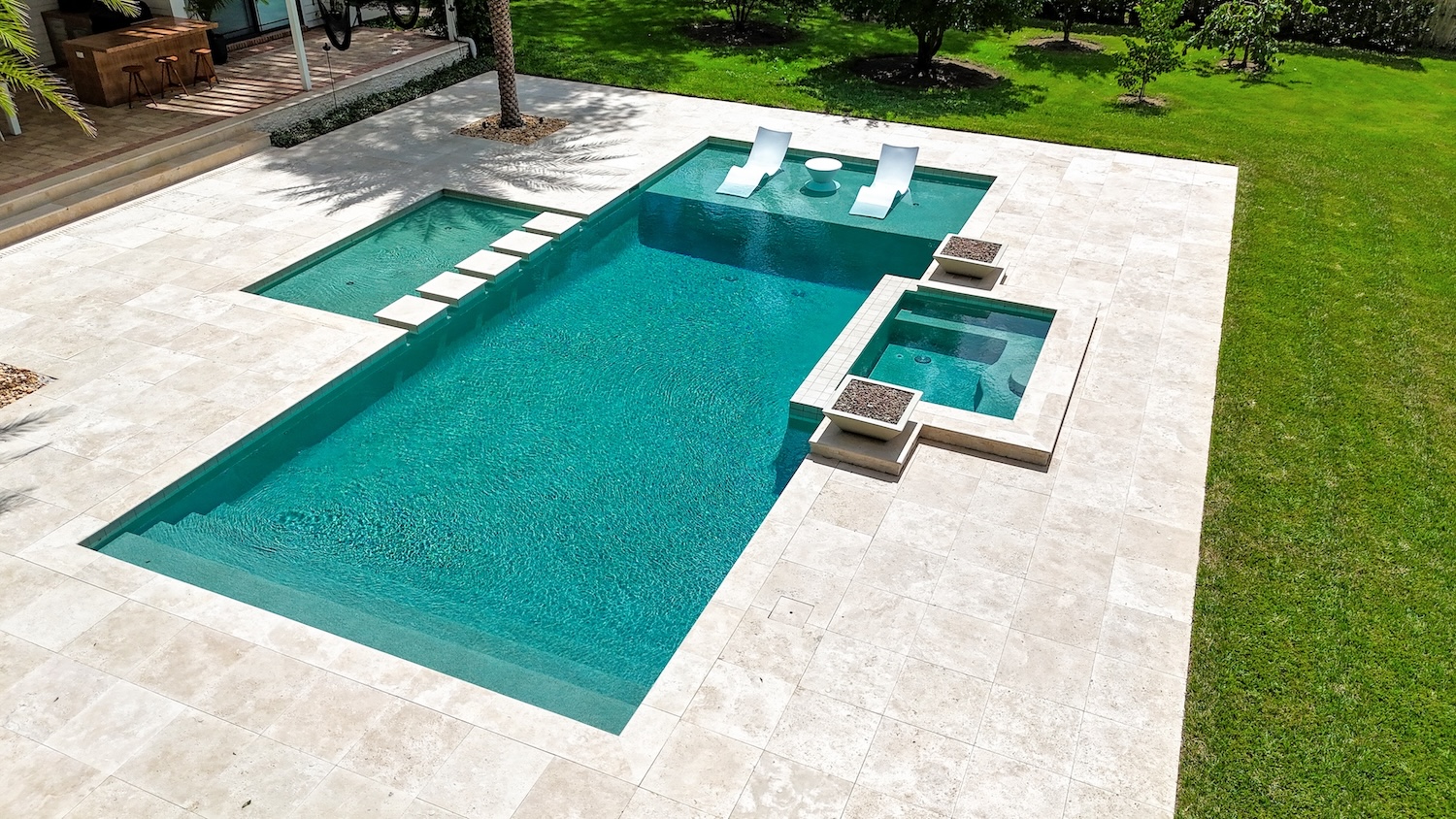
An inground pool is created by digging into the ground and building the pool structure within the excavated area. Unlike above-ground options, these pools are built into the landscape, offering a more refined and cohesive look. Known for their design flexibility, inground pools can be customized in shape, size, and features — making them a popular choice for homeowners who want to elevate their outdoor living experience.
Pros
- Inground pools can last 50-100 years or even more if they are well-maintained, and some even come with a lifetime warranty.
- Inground pools are fully customizable, so you can choose the perfect shape, size, depth, and look for your backyard.
- Building an inground pool gives you the option to add luxurious features like waterfalls, custom lighting, or a beach entry.
- An attractive and well-kept inground pool can increase your home’s value.
Cons
- Installing an inground pool is a complex endeavor that can take between 8-16 weeks, and it must be done by professionals.
- Inground pool installation can cost $40,000 to $120,000 or more, depending on the size of your pool and the materials and custom features you choose for it.
- Inground pools require resurfacing every 8-20 years, depending on the type of finish.
What is an above-ground pool?
Above-ground pools sit on top of the ground, a deck, or a concrete slab. They come in a variety of materials, including vinyl, aluminum, and resin. Deluxe models may include lighting or a heater, but most above-ground pools are relatively small and simple. They’re a cost-effective and flexible option for those who aren’t ready to commit to an inground pool.
Pros
- Above-ground pools cost less than inground pools: the kit and the installation often come to around $7,000-$8,000.
- Above-ground pools can be installed in just a few days, and you don’t necessarily need to call in the professionals. Some above-ground pools come as kits that you can construct yourself.
- Renters love above-ground pools because they can be relocated or removed from your backyard with relative ease.
Cons
- Since they’re prefabricated, above-ground pools only come in a few standard shapes, sizes, and designs.
- Above-ground pools offer far fewer options for customization and extra features.
- Even with proper maintenance, most above-ground pools will need to be replaced within 7-15 years.
- Above-ground pools do not improve your home’s property value, and some HOAs do not allow them.
Key Differences Between an Inground and Above-Ground Pool
Here are the most important factors to consider when planning a backyard pool project.
Cost
Above-ground pools cost less to install than inground pools, but inground pools’ durability may make them a better long-term investment.
Customization
Building an inground pool gives you control over the pool’s design. You can customize its shape, size, features, and materials down to the last detail. Since above-ground pools are prefabricated, your options for customizing them are much more limited. If you opt to renovate your pool at a later point, inground pools offer more renovation options but remodeling costs can be more expensive depending on the project.
Size
Inground pools can be nearly any size or depth; options range from compact plunge pools to lap pools fit for the Olympics. Above-ground pools tend to be smaller and shallower than inground pools. They are rarely more than five feet deep or more than 30 feet in diameter.
Durability
An inground pool that is regularly cleaned and serviced can quite literally last a lifetime. Above-ground pools, on the other hand, tend to last just 7-15 years because they’re more exposed to the elements.
Maintenance
Inground and above-ground pools require about the same amount of maintenance. Above-ground pools may be a bit easier to care for because they are usually smaller and less complex than inground pools, but their greater vulnerability to wear and tear can temper this advantage.
Extra Features
When you imagine your dream pool, what do you see? If you’re envisioning water features, custom lighting, and a beach entry — an inground pool will certainly be the best option for you. However, if you don’t need all the bells and whistles, an above-ground pool may suit you perfectly.
Home Value
If you own your home, bear in mind that installing a pool might affect its value when it’s time to sell. If you live in a warm climate, a well-maintained inground pool may increase your home’s value. An above-ground pool, on the other hand, will likely have a neutral to negative effect on your bottom line.
Get a Free Consultation for a Custom Inground Pool with Anthony & Sylvan
If you’re finally ready to transform your backyard into the summertime oasis of your dreams, then you’re ready for a custom inground pool from Anthony & Sylvan, America’s most trusted pool builder!
When you contact us for a free on-site consultation, an Anthony & Sylvan design consultant will walk you through the inground pool installation process step-by-step and create a custom estimate and 3D rendering of your project.
Don’t put it off another year! There’s never been a better time to invest in fun and relaxation for the whole family.